

Buried Line Pipe plays a critical role in transporting oil, natural gas, water, and other fluids across long distances. Because these pipelines are installed underground, they must withstand soil pressure, corrosion, mechanical stress, and fluctuating operating conditions over decades of service.
For a professional Manufacturer with large-scale Production capability and stable batch supply capacity, meeting API 5L standards is not just a certification requirement—it is a fundamental quality benchmark that ensures safety, durability, and performance in buried pipeline systems.
API 5L compliance guarantees that buried pipelines meet internationally recognized specifications for chemical composition, mechanical properties, testing procedures, and dimensional tolerances.
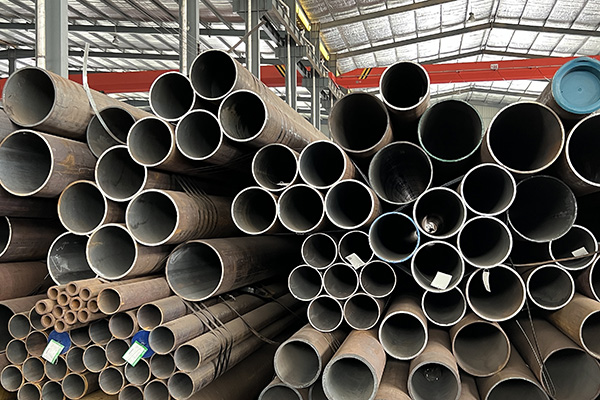

What Is API 5L and Why Is It Critical?
API 5L is a standard developed by the American Petroleum Institute that specifies requirements for line pipe used in pipeline transportation systems in the petroleum and natural gas industries.
It defines:
·Pipe grades (such as X42, X52, X60, X65, X70)
·Chemical composition limits
·Tensile strength requirements
·Yield strength specifications
·Impact testing standards
·Dimensional tolerances
For buried pipeline applications, these specifications are especially important because underground installation exposes pipes to complex environmental stresses that cannot be easily monitored after installation.
Mechanical Strength and Structural Reliability
Buried pipelines are subjected to:
·External soil load
·Traffic load above ground
·Internal operating pressure
·Temperature fluctuations
·Ground movement
API 5L ensures that each buried line pipe meets minimum yield and tensile strength requirements. This mechanical reliability prevents pipe deformation, cracking, or rupture under long-term stress.
Higher-grade pipes, such as API 5L X65 or X70, provide enhanced strength-to-weight ratios, allowing for thinner walls without compromising structural integrity. This improves installation efficiency while maintaining safety margins.
Corrosion Resistance in Underground Environments
Corrosion is one of the biggest threats to buried pipeline systems. Underground soil conditions vary widely in moisture content, chemical composition, and microbial activity.
API 5L standards regulate chemical composition, including carbon, manganese, sulfur, and phosphorus content. Controlled composition enhances weldability and reduces susceptibility to cracking and corrosion-related failure.
When combined with external coatings and cathodic protection systems, API-compliant buried line pipe offers extended service life and lower maintenance costs.
Dimensional Accuracy and Installation Efficiency
API 5L also defines strict dimensional tolerances for wall thickness, diameter, and straightness. Accurate dimensions are essential for:
·Reliable field welding
·Proper joint alignment
·Consistent internal flow capacity
·Reduced installation delays
For manufacturers supplying large infrastructure projects, dimensional precision ensures compatibility across thousands of pipeline segments.
Consistent production quality demonstrates manufacturing stability and batch reliability.
Welding Performance and Joint Integrity
Pipeline welding is a critical process during installation. Poor weldability increases the risk of joint defects and long-term leakage.
API 5L regulates chemical balance and mechanical properties to enhance weld performance. Controlled carbon equivalent values reduce cracking risks during welding operations.
Reliable welding characteristics are essential for buried systems where inspection and maintenance access are limited after installation.
Quality Testing and Inspection Requirements
API 5L requires comprehensive testing procedures, including:
·Hydrostatic testing
·Non-destructive testing (NDT)
·Impact testing
·Flattening tests
·Dimensional inspection
These testing protocols ensure that each buried line pipe meets strict quality benchmarks before leaving the production facility.
For a Manufacturer operating advanced Production lines and supplying bulk quantities, standardized testing ensures consistency across every batch.
Long-Term Safety and Regulatory Compliance
Pipeline failures can result in environmental damage, financial losses, and safety hazards. Regulatory authorities in many countries require API-compliant materials for oil and gas pipeline construction.
Using API 5L-certified buried line pipe helps project developers:
·Meet international engineering standards
·Simplify regulatory approval processes
·Reduce long-term liability risks
·Enhance investor and stakeholder confidence
Compliance is not merely a technical detail—it is a risk management strategy.
Economic Benefits of API 5L Standardization
Standardized production based on API 5L specifications supports:
·Scalable manufacturing
·Reduced rejection rates
·Predictable mechanical performance
·Efficient supply chain coordination
For large-scale pipeline projects, uniform standards reduce material mismatch and simplify procurement planning.
A professional Manufacturer with strong Production capacity and batch supply capability can ensure consistent API-compliant output, supporting long-term infrastructure development.
Supporting High-Pressure and High-Temperature Applications
Some buried pipelines operate under high pressure or extreme environmental conditions. API 5L grades are designed to accommodate these operational demands.
Higher-grade pipes offer:
·Improved fracture toughness
·Enhanced resistance to crack propagation
·Better performance in low-temperature environments
These properties are crucial in harsh climates and high-demand energy transport systems.
Sustainability and Service Life Optimization
Long-lasting pipeline systems reduce resource consumption and environmental impact. API 5L compliance ensures predictable durability and performance.
When properly coated and installed, compliant buried line pipe can operate reliably for decades with minimal intervention.
Extended service life contributes to sustainable infrastructure development and long-term operational efficiency.
Conclusion: Why API 5L Standards Define Buried Line Pipe Quality
Buried Line Pipe used in critical energy and water transportation systems must meet rigorous mechanical, chemical, and dimensional standards. API 5L provides a globally recognized framework that ensures safety, durability, and performance in underground applications.
For a professional Manufacturer committed to advanced Production processes and dependable batch supply capability, adhering to API 5L is a demonstration of engineering integrity and quality assurance.
From structural strength and corrosion resistance to welding reliability and regulatory compliance, API 5L standards form the foundation of safe and efficient buried pipeline systems. In large-scale infrastructure development, choosing API-compliant buried line pipe is not only a technical decision—it is a strategic investment in long-term reliability and operational security.
References
GB/T 7714:Anderson T L, Anderson T L. Fracture mechanics: fundamentals and applications[M]. CRC press, 2005.
MLA:Anderson, Ted L., and Ted L. Anderson. Fracture mechanics: fundamentals and applications. CRC press, 2005.
APA:Anderson, T. L., & Anderson, T. L. (2005). Fracture mechanics: fundamentals and applications. CRC press.