

Transmission Line Pipe is a critical component in long-distance oil, gas, and energy transportation systems. Among various steel grades, API 5L X70 has become a widely adopted material due to its high strength, reliable toughness, and efficient performance under high-pressure conditions.
For a professional Manufacturer operating advanced Production lines and offering stable batch supply capability, API 5L X70 transmission line pipe represents a balance between mechanical strength and economic feasibility. Its mechanical performance enables pipeline designers to reduce wall thickness while maintaining structural safety, improving both transport efficiency and installation practicality.
Understanding the mechanical characteristics of API 5L X70 is essential for engineers, procurement managers, and infrastructure developers.
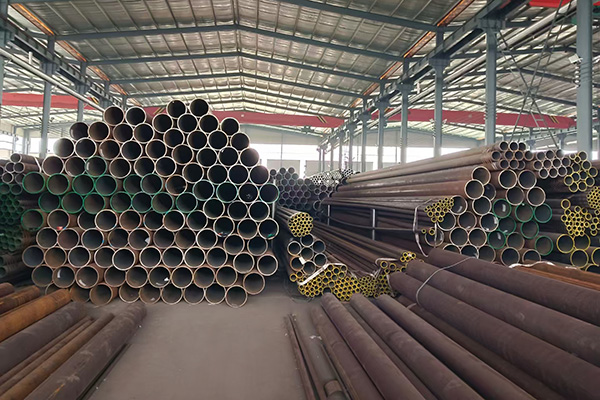
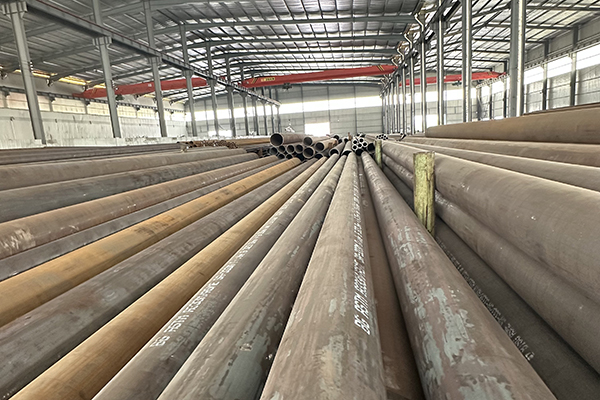
Overview of API 5L X70 Steel Grade
API 5L X70 belongs to the high-strength low-alloy (HSLA) steel category. The “X70” designation indicates a minimum yield strength of 70,000 psi (approximately 485 MPa).
Compared with lower grades such as X52 or X60, X70 offers:
·Higher yield strength
·Improved tensile resistance
·Better fracture toughness
·Optimized strength-to-weight ratio
These properties make it suitable for high-pressure transmission line pipe applications, including cross-country oil and natural gas pipelines.
Yield Strength and Tensile Strength
Yield Strength
Yield strength defines the stress at which permanent deformation begins. For API 5L X70 transmission line pipe, the specified minimum yield strength is approximately 485 MPa.
High yield strength allows pipelines to withstand:
·Internal fluid pressure
·External soil loading
·Thermal expansion stress
·Operational pressure fluctuations
This property enables thinner pipe walls compared to lower-grade steels while maintaining design safety margins.
Tensile Strength
Tensile strength represents the maximum stress a material can withstand before fracture. API 5L X70 typically exhibits tensile strength in the range of 570–760 MPa, depending on production specifications.
Higher tensile strength improves resistance to rupture and enhances overall structural reliability, particularly in long-distance buried or subsea transmission systems.
Fracture Toughness and Crack Resistance
Fracture toughness is a critical mechanical property for transmission line pipe. Pipelines operate under dynamic conditions where defects, stress concentration, or external damage may occur.
API 5L X70 is engineered to provide:
·High Charpy impact energy values
·Resistance to brittle fracture
·Improved crack propagation resistance
This toughness is especially important in low-temperature environments where steel may become more susceptible to brittle failure.
Controlled rolling and thermo-mechanical processing during production refine the grain structure, enhancing both strength and toughness.
Ductility and Deformation Capacity
Ductility measures the material’s ability to deform plastically before fracture. API 5L X70 transmission line pipe maintains sufficient elongation values to ensure safe deformation under extreme loading conditions.
Adequate ductility helps:
·Absorb ground movement stress
·Tolerate installation strain
·Prevent sudden catastrophic failure
This balance between strength and ductility is a defining feature of high-performance pipeline steels.
Weldability and Heat-Affected Zone Performance
Weldability is essential for field construction of transmission pipelines. API 5L X70 is designed with controlled carbon equivalent values to reduce weld cracking risks.
Proper chemical composition control ensures:
·Lower susceptibility to hydrogen-induced cracking
·Stable microstructure in heat-affected zones
·Reliable joint integrity
For large infrastructure projects requiring extensive field welding, stable weld performance ensures construction efficiency and long-term reliability.
Fatigue Resistance Under Cyclic Loading
Transmission pipelines often experience pressure cycling during operation. Repeated loading can lead to fatigue damage over time.
API 5L X70 offers improved fatigue resistance due to:
·Fine-grained microstructure
·Balanced alloy composition
·Controlled residual stress distribution
This property enhances service life and reduces maintenance frequency.
Corrosion Performance and Environmental Durability
Although mechanical properties define structural strength, corrosion resistance contributes significantly to pipeline longevity.
API 5L X70 transmission line pipe is often combined with:
·External anti-corrosion coatings
·Fusion bonded epoxy (FBE) layers
·Cathodic protection systems
The controlled chemical composition improves resistance to stress corrosion cracking and hydrogen-related damage.
Production Processes That Influence Mechanical Properties
The mechanical performance of API 5L X70 transmission line pipe is directly linked to manufacturing processes.
Modern production techniques include:
·Thermo-mechanical controlled processing (TMCP)
·Accelerated cooling systems
·Precision plate rolling
·Advanced heat treatment methods
These processes refine grain structure and optimize strength-toughness balance.
For a professional Manufacturer with advanced Production facilities and consistent batch supply capability, strict quality control ensures uniform mechanical performance across large orders.
Dimensional Accuracy and Mechanical Stability
Mechanical properties must align with dimensional precision. Wall thickness tolerance, roundness, and straightness influence structural behavior under pressure.
High-precision forming and inspection systems ensure:
·Uniform stress distribution
·Reliable installation alignment
·Reduced risk of localized failure
Consistent dimensional quality supports predictable mechanical performance.
Application Advantages of API 5L X70 Transmission Line Pipe
Due to its mechanical characteristics, API 5L X70 is widely used in:
·Long-distance natural gas pipelines
·Crude oil transportation systems
·High-pressure transmission networks
·Offshore and onshore infrastructure projects
Its optimized strength-to-weight ratio reduces material consumption while maintaining safety margins.
Long-Term Reliability and Infrastructure Safety
Pipeline infrastructure is designed for decades of operation. Mechanical integrity is essential to minimize environmental and economic risks.
API 5L X70 transmission line pipe provides:
·Structural stability under high pressure
·Resistance to fracture propagation
·Adaptability to temperature variation
·Compatibility with modern welding techniques
These characteristics ensure long-term operational security in demanding environments.
Conclusion: Why Mechanical Properties Define Transmission Line Pipe Performance
Transmission Line Pipe manufactured to API 5L X70 standards offers a powerful combination of high yield strength, tensile performance, fracture toughness, and weldability. These mechanical properties enable efficient high-pressure transport while maintaining safety and structural stability.
For a professional Manufacturer operating advanced Production systems and delivering reliable batch supply capacity, ensuring consistent mechanical performance is a core commitment to infrastructure quality.
In modern energy transportation systems, selecting API 5L X70 transmission line pipe is not only a material choice—it is a strategic investment in strength, durability, and long-term operational reliability.
References
GB/T 7714:Janssen M, Zuidema J, Wanhill R. Fracture mechanics: fundamentals and applications[M]. CRC Press, 2004.
MLA:Janssen, Michael, Jan Zuidema, and Russell Wanhill. Fracture mechanics: fundamentals and applications. CRC Press, 2004.
APA:Janssen, M., Zuidema, J., & Wanhill, R. (2004). Fracture mechanics: fundamentals and applications. CRC Press.