

API 5L Line Pipe Specifications and Applications: A Complete Guide
The American Petroleum Institute published API 5L as the definitive standard governing the manufacture of line pipe used in the oil and gas industry. This specification covers a broad range of products, from the most economical grade to the highest-strength variants available today. Engineers, procurement specialists, and project managers routinely consult this standard when specifying materials for pipeline systems that transport oil, natural gas, and refined products across vast distances. Understanding the nuances of API 5L helps buyers make informed decisions when sourcing from a factory or selecting a supplier for critical infrastructure projects.
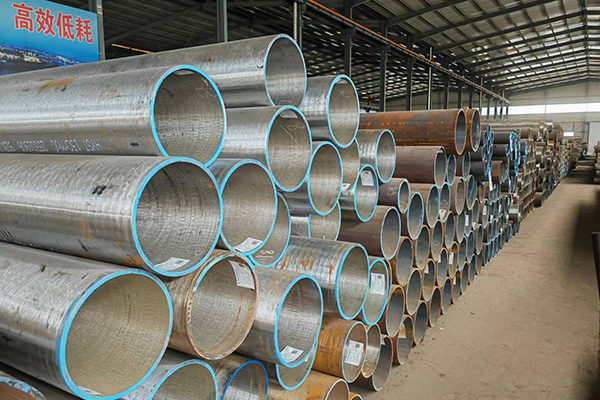
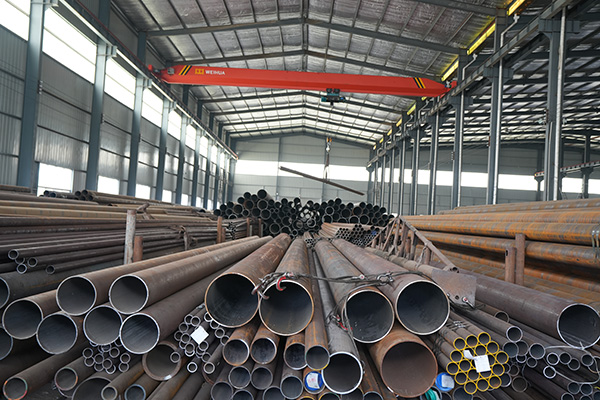
Understanding API 5L Pipe Grades
API 5L designates pipe grades using two systems. The older system uses a letter designation such as Grade B, while modern practice relies on a numerical code where the number following the letter X indicates the minimum yield strength in ksi. For instance, Grade B corresponds to approximately 241 MPa (35 ksi) minimum yield strength, while X70 pipe offers a minimum yield strength of 483 MPa (70 ksi). The intermediate grades serve different service requirements across the pipeline network.
Grade B (245 MPa / 35.5 ksi yield) typically appears in gathering lines and low-pressure distribution systems where operating conditions remain relatively mild. X42 through X52 grades handle the bulk of mid-range transmission pipelines, with X52 (358 MPa / 52 ksi yield) representing a popular choice for many onshore projects. X56 (386 MPa / 56 ksi) and X60 (413 MPa / 60 ksi) address higher-pressure applications, while X65 (448 MPa / 65 ksi) and X70 (483 MPa / 70 ksi) serve long-distance, high-pressure trunk lines where wall thickness reduction translates directly into material and installation cost savings.
PSL1 Versus PSL2: What Sets Them Apart
The Product Specification Level defines the quality verification requirements a manufacturer must satisfy. PSL1 pipe meets basic chemical composition and mechanical property requirements without additional testing protocols. A supplier offering PSL1 material provides certificates of compliance confirming that the pipe conforms to standard limits for carbon, manganese, phosphorus, sulfur, and other elements, along with tensile and yield strength data.
PSL2 adds strict controls on chemistry, carbon equivalent values, and mandatory impact testing. The manufacturer must demonstrate notch toughness through Charpy V-notch testing at specified temperatures, which is essential for pipelines operating in cold environments or carrying sour (hydrogen sulfide-containing) hydrocarbons. PSL2 also imposes limits on maximum yield strength and maximum yield-to-tensile ratio, ensuring the pipe exhibits adequate strain capacity in environments where ground movement or thermal cycling creates longitudinal stress. Projects specified under ASME B31.4 or ASME B31.8 frequently demand PSL2 material for critical transmission service.
Seamless Versus Welded Manufacturing Routes
Seamless pipe derives its structure from a solid round billet heated and pierced to create a hollow shell, which subsequent rolling and stretching operations shape into final dimensions. This process produces pipe without any longitudinal weld seam, which appeals to designers specifying material for high-pressure or sour service applications. Seamless API 5L pipe typically commands a price premium, particularly in larger diameters and higher grades.
Welded pipe, also known as ERW (Electric Resistance Welded) or HFW (High-Frequency Welded) pipe, forms the longitudinal seam through welding after shaping flat steel strip or plate. Submerged Arc Welded (SAW) pipe, produced by forming plate and welding both inside and outside faces, handles the largest diameters required for major transmission pipelines. Modern welding quality control, including ultrasonic testing and radiographic examination of weld seams, brings welded pipe into compliance with the most demanding project specifications. Many pipeline operators source welded pipe from qualified manufacturers for large-diameter, moderate-pressure applications where the cost advantage is substantial.
Common Applications in Oil and Gas Transmission
API 5L line pipe serves the full lifecycle of hydrocarbon transport. Onshore transmission lines spanning hundreds or thousands of kilometers rely heavily on X65 and X70 grade material to minimize wall thickness and thus total steel tonnage. Offshore platforms feed subsea pipelines that must withstand external hydrostatic pressure and internal operational loads, often requiring PSL2 seamless or heavy-wall welded pipe. LNG terminal facilities use smaller-diameter API 5L pipe for process piping, while refinery tank farms and petrochemical complexes specify API 5L material for utility and service piping routed through the facility.
When selecting a supplier, project engineers should verify the manufacturer's API 5L monogram license and review mill test reports covering heat number traceability, chemical analysis, hydrostatic test pressure, and non-destructive examination results. A reputable factory maintains documented quality management systems that satisfy ISO 9001 requirements and can demonstrate a track record of on-time delivery for projects of comparable scope.
References
American Petroleum Institute, API Specification 5L: Specification for Line Pipe, 46th Edition, API Publishing Services, 2018.
ASME B31.4:2019, Pipeline Transportation Systems for Liquids and Slurries, American Society of Mechanical Engineers, 2019.
ASME B31.8:2020, Gas Transmission and Distribution Piping Systems, American Society of Mechanical Engineers, 2020.
Mohan K. Malhotra, Pipeline Design for Water and Wastewater, Butterworth-Heinemann, 2019.