

ASTM A333 Grade 6 Low Temperature Steel Pipe: Properties and Applications
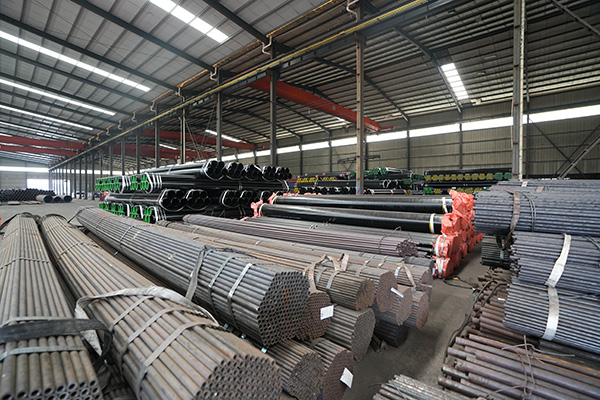
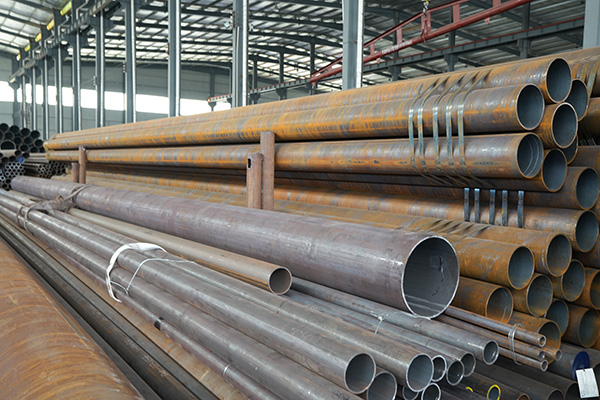
Engineers designing systems for cold climates or cryogenic service face a material challenge that ordinary carbon steel pipe cannot solve. At temperatures dropping below the ductile-to-brittle transition range, standard pipe grades lose toughness rapidly, risking catastrophic fracture under service loads. ASTM A333 addresses this problem directly, establishing requirements for seamless and welded pipe capable of reliable operation at temperatures down to -45°C (-50°F) for Grade 6. A steel pipe factory producing A333 material adheres to rigorous process controls because the difference between safe operation and structural failure often hinges on chemistry, heat treatment, and impact testing precision.
Chemical Composition Requirements
ASTM A333 Grade 6 pipe contains a carefully balanced composition designed to maintain toughness at low temperatures while remaining weldable. Carbon content stays at or below 0.30%, with manganese restricted to between 0.29% and 1.06%. Phosphorus and sulfur receive strict ceilings of 0.025% and 0.025% respectively, minimizing embrittlement sources. The silicon content typically falls between 0.10% and 0.35%, contributing to deoxidation during steelmaking without compromising notch toughness.
Trace amounts of nickel, up to 0.40%, appear in the composition to enhance low-temperature ductility. This nickel contribution distinguishes Grade 6 from standard carbon steel grades, giving the material superior ability to absorb impact energy without fracturing when the environment cools. Suppliers typically provide material test reports confirming chemistry within these limits, and buyers should verify heat-by-heat traceability when sourcing for critical applications.
Mechanical Properties and Tensile Testing
The tensile requirements for A333 Grade 6 establish minimum expectations for strength and ductility. Yield strength must reach at least 240 MPa (35,000 psi), while ultimate tensile strength must equal or exceed 415 MPa (60,000 psi). These figures apply to both seamless and welded pipe in sizes through NPS 30, though different heat treatment conditions may apply depending on wall thickness and manufacturing route.
Elongation requirements ensure the pipe demonstrates adequate ductility during deformation. The standard specifies minimum elongation values calculated from gauge length measurements taken during tensile testing. Pipe that meets these mechanical criteria has demonstrated the ability to yield plastically before reaching fracture, an essential safety characteristic in pressure-containing applications where overpressure events or thermal stress might momentarily exceed elastic limits.
Charpy Impact Testing: The Critical Requirement
No aspect of ASTM A333 commands more attention during manufacturing and procurement than the Charpy V-notch impact test. The standard requires testing at -45°C (-50°F) using three specimens per test lot. Each individual specimen must achieve a minimum impact energy of 18 J (13 ft·lbf), with the average of three specimens reaching at least 20 J (15 ft·lbf). This protocol applies to pipe manufactured in the normalized, normalized and tempered, or subcritical annealed condition.
Impact testing validates that the pipe possesses sufficient notch toughness to resist crack propagation under dynamic or shock loading. In arctic pipeline applications, ground movement, thermal contraction, and pressure fluctuations combine to create exactly the conditions where brittle fracture poses a threat. A manufacturer committed to quality conducts impact testing on every heat treatment lot, not merely on qualification samples, and maintains records demonstrating consistent toughness performance over time.
Heat Treatment and Manufacturing Considerations
Grade 6 pipe may undergo several approved heat treatment routes. Normalizing at temperatures above the upper critical point followed by air cooling produces a uniform grain structure. Normalizing with tempering adds a subsequent heating cycle to relieve residual stresses. Subcritical annealing, performed below the lower critical temperature, serves as an alternative for certain wall thicknesses and manufacturing conditions. The supplier's quality plan should clearly specify which heat treatment applies to the material ordered, and the purchaser's inspection representative typically witnesses tension and impact testing to verify compliance.
Applications in Cryogenic and Low-Temperature Service
Arctic oil and gas developments represent the most visible application domain for ASTM A333 Grade 6. Pipeline systems traversing permafrost regions, coastal facilities in sub-zero climates, and gas processing plants located in northern latitudes all specify this material for process piping, utility lines, and gathering pipelines. The standard also appears in LNG facilities where pipe carries cryogenic liquids or refrigerated gases through early-stage processing steps.
Beyond hydrocarbons, Grade 6 pipe serves industrial gas distribution, refrigeration plant piping, and chemical processing applications where the process stream operates at low temperature. The combination of reliable low-temperature toughness and pressure-containing capability makes this grade the default choice for engineers writing specifications for cold service piping. Selecting a qualified manufacturer with demonstrated experience supplying A333 material for similar projects provides the best assurance that delivered pipe will meet impact toughness requirements consistently across the full order quantity.
References
ASTM A333/A333M-22, Standard Specification for Seamless and Welded Steel Pipe for Low-Temperature Service and Other Applications with Required Notch Toughness, ASTM International, 2022.
ISO 15663-1:2000, Petroleum and Natural Gas Industries — Life Cycling Costing — Part 1: Methodology for Calculating Installed Costs and the Full Life Cycle Costs of Process Plants, International Organization for Standardization, 2000.
Robert L. Brockenbrough, Pipeline Design for Pressure Piping Subject to Elevated Temperatures and Sub-Zero Conditions, ASME Press, 2020.
The American Society of Mechanical Engineers, ASME BPVC Section II: Materials, ASME, 2023.