

Understanding API 5L X52 Grade Requirements
The API 5L X52 grade delivers enhanced yield strength of 52,000 psi (360 MPa) compared to lower grades, enabling thinner wall designs and reduced material costs for equivalent pressure ratings. Manufacturers achieve these properties through controlled chemical composition and optimized rolling and heat treatment processes. The grade serves applications requiring moderate-to-high strength combined with good weldability and toughness characteristics.
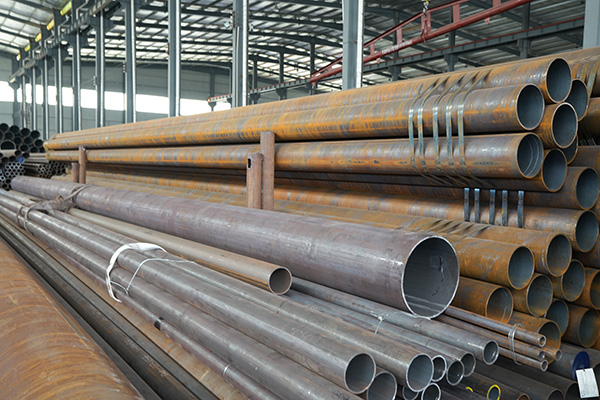
Factory production of API 5L X52 seamless pipes begins with carefully selected steel grades, typically low-alloy carbon-manganese steel with micro-alloying additions of niobium, vanadium, or titanium. These elements contribute to grain refinement and precipitation strengthening, achieving the required mechanical properties while maintaining acceptable carbon equivalent values for field welding. Suppliers provide detailed chemical composition certificates supporting customer qualification requirements.
Advanced Manufacturing Processes
Modern seamless pipe manufacturing employs rotary piercing and plug mill or continuous mandrel rolling processes to convert solid round billets into hollow pipe shells. Subsequent rolling operations achieve final dimensions with tight tolerances on wall thickness, diameter, and length. Heat treatment processes including normalizing or quenching and tempering develop the required combination of strength and toughness.
Leading manufacturers invest in state-of-the-art equipment including automated inspection systems, precision cutting and finishing equipment, and advanced coating application lines. Factory automation ensures consistent quality across production batches while minimizing human error. Suppliers serving international markets maintain production capacity sufficient for both small specialty orders and large project requirements.
Critical Applications in Energy Transportation
Oil and gas transmission operators specify API 5L X52 for pipelines operating at moderate to high pressures where weight savings translate to construction cost benefits. The higher strength grade enables longer spans between support structures in above-ground installations and reduces welding quantities in buried systems. Engineering studies confirm that X52 often represents the optimal balance between material cost and installed cost for many transmission applications.
Offshore platform piping and subsea flowlines frequently require X52 or higher grades to minimize weight while meeting pressure containment requirements. Suppliers with offshore project experience understand the additional quality requirements including enhanced non-destructive testing, third-party inspection protocols, and stringent documentation packages. Factory capabilities for specialized testing and certification support these demanding applications.
Quality Verification and Documentation
Comprehensive quality assurance programs verify API 5L X52 pipe conformance to all applicable requirements. Tensile testing confirms yield and tensile strength properties meet specification minimums. Charpy impact testing demonstrates adequate toughness at minimum design temperatures. Hydrostatic testing verifies pressure integrity, while non-destructive examination detects surface and subsurface imperfections.
Manufacturers maintain detailed quality records enabling complete traceability from raw material sourcing through final product release. Mill test certificates document chemical composition, mechanical properties, and all inspection results for each pipe or heat. Suppliers provide additional documentation including certified material test reports, quality plans, and conformance certificates as required by customer specifications.
Supplier Selection Considerations
Choosing the right API 5L X52 pipe supplier requires evaluation of technical capabilities, quality management systems, production capacity, and commercial terms. API monogram licensing demonstrates manufacturer commitment to quality system requirements. References from similar projects and customer feedback provide insight into delivery performance and service quality. Technical support capabilities including engineering assistance and field services add value beyond basic product supply.
Long-term supplier relationships often yield benefits including priority production scheduling, technical collaboration on product optimization, and competitive pricing for repeat business. Manufacturers invest in customer success when partnerships extend beyond individual transactions, supporting reliable supply chains for critical energy infrastructure projects worldwide.
References
American Petroleum Institute. API 5L Specification for Line Pipe, 46th Edition.
American Society for Testing and Materials. ASTM A53/A53M Standard Specification for Pipe, Steel, Black and Hot-Dipped, Zinc-Coated, Welded and Seamless.
Det Norske Veritas. DNV-ST-F101 Submarine Pipeline Systems, 2021.