

Technical Specifications of API 5L X42 Steel Pipe
The API 5L X42 grade represents one of the most widely specified line pipe materials in the oil and gas industry. With minimum yield strength of 42,000 psi (290 MPa) and tensile strength requirements of 60,000 psi (415 MPa) minimum, this grade balances structural integrity with economical material costs. Manufacturers producing X42 pipes offer both seamless and welded options, with electric resistance welded (ERW) and submerged arc welded (SAW) processes dominating the welded segment.
Factory production of API 5L X42 pipes requires careful attention to chemical composition, particularly carbon equivalent values that affect weldability. Suppliers provide pipes in both PSL1 (Product Specification Level 1) and PSL2 grades, with PSL2 offering enhanced toughness requirements and more stringent testing protocols. Customers in demanding applications typically specify PSL2 for improved reliability in critical pipeline infrastructure.
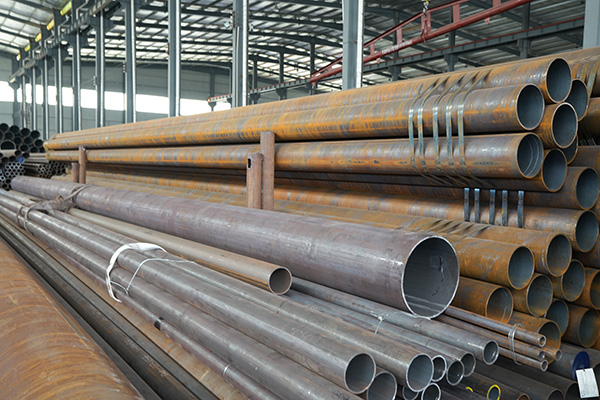
Manufacturing Excellence at Modern Pipe Factories
Contemporary manufacturing facilities employ advanced production technologies to ensure consistent quality in API 5L X42 line pipes. Continuous casting processes produce premium steel billets, while modern rolling mills achieve precise dimensional tolerances and superior surface finish. Heat treatment operations including normalizing, quenching, and tempering optimize mechanical properties for specific service conditions.
Quality-conscious suppliers maintain comprehensive traceability systems, tracking each pipe from raw material sourcing through final inspection and shipment. Factory laboratories conduct real-time chemical analysis and mechanical testing to verify compliance with API specifications. This systematic approach ensures that customers receive products meeting the most demanding project requirements.
Applications Across Energy Infrastructure
Oil and gas transmission pipelines represent the primary application for API 5L X42 pipes. Onshore gathering systems, cross-country transmission lines, and distribution networks rely on this proven material grade. Chemical processing facilities and petrochemical plants also specify X42 for internal piping systems handling hydrocarbons and associated fluids under moderate pressure and temperature conditions.
Water transmission and industrial process piping applications increasingly adopt API 5L X42 due to its favorable strength-to-cost ratio. Suppliers serving municipal infrastructure projects and industrial construction provide coated pipes with external corrosion protection and internal lining options for extended service life. Factory-applied coatings including fusion-bonded epoxy and three-layer polyethylene systems protect against soil corrosion in buried installations.
Quality Assurance and Testing Protocols
Reputable manufacturers implement rigorous quality control programs aligned with API 5L requirements. Hydrostatic testing verifies pressure integrity at levels exceeding normal operating conditions. Non-destructive examination using ultrasonic, radiographic, or magnetic particle methods detects subsurface defects that visual inspection cannot identify. Dimensional verification ensures wall thickness, diameter, and length specifications meet customer requirements.
For PSL2 specification pipes, additional Charpy impact testing demonstrates adequate toughness for low-temperature service. Suppliers provide detailed mill test certificates documenting chemical composition, mechanical properties, and all testing results. This documentation supports customer qualification processes and regulatory compliance requirements.
Choosing the Right Pipe Supplier for Your Project
Selecting an experienced API 5L X42 pipe supplier requires evaluation of manufacturing capabilities, quality certifications, delivery reliability, and technical support. Established manufacturers with API monogram licensing demonstrate commitment to quality system requirements. Geographic proximity to project sites and logistics capabilities affect total delivered cost and schedule performance.
Many suppliers offer engineering support services including material selection guidance, welding procedure qualification assistance, and field technical representation. These value-added services enhance project outcomes and reduce risk for customers undertaking complex pipeline construction programs. Partnering with a capable factory ensures access to expertise throughout the project lifecycle.
References
American Petroleum Institute. API 5L Specification for Line Pipe, 46th Edition, March 2018.
International Organization for Standardization. ISO 3183 Petroleum and Natural Gas Industries - Steel Pipe for Pipeline Transportation Systems.
Canadian Standards Association. CSA Z245.1 Steel Pipe, 2021 Edition.