

In the demanding environment of fertilizer production, piping operates under a combination of conditions that few other industries replicate: high pressure, elevated temperature, and process media that include ammonia, carbon dioxide, urea carbamate, nitric acid and hydrogen-rich synthesis gas. A failure in this service is not merely a maintenance event - it is a serious safety incident with environmental and regulatory consequences. GB/T 6479 high pressure seamless steel pipe exists specifically for this duty, and it continues to be specified across ammonia, urea and nitrogen fertilizer plants worldwide.
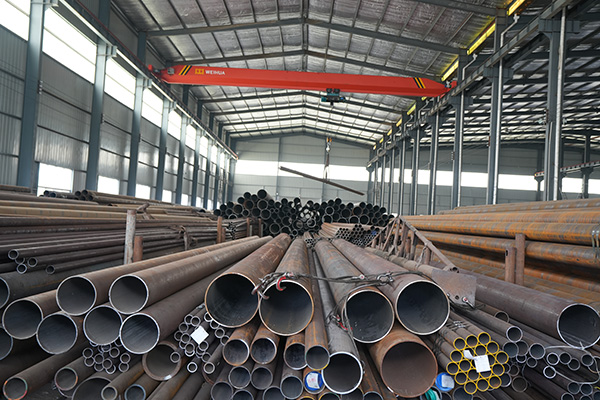
Global food production depends on nitrogen fertilizer supply, and capacity expansion continues across Asia, the Middle East, Africa and Latin America. Each new plant and each debottlenecking project requires high pressure piping that meets defined chemical, mechanical and testing requirements - and that is available in the large quantities and varied sizes a modern fertilizer complex consumes.
What GB/T 6479 Covers
GB/T 6479 specifies seamless steel tubes for high pressure fertilizer equipment. It addresses the full pressure boundary of fertilizer service, from high pressure synthesis loops to lower pressure transfer and utility lines. Commonly supplied grades include:
20 - carbon steel grade for lower temperature utility and general service within the plant
16Mn - higher strength carbon manganese grade for higher pressure duty
Q345E and other Q345 variants - fine grain low alloy grades with good low temperature toughness and weldability
15CrMo and similar Cr-Mo grades - for elevated temperature sections such as reformer outlet and high temperature shift conversion piping
Requirements include controlled chemistry, mandatory heat treatment where applicable, hydrostatic testing of each length, flattening and flaring tests, and full mechanical verification. Delivered material carries documented traceability to heat, which is essential for pressure equipment compliance.
Material Challenges Specific to Fertilizer Service
Three degradation mechanisms dominate fertilizer plant piping and should drive specification:
Hydrogen attack and hydrogen embrittlement - ammonia synthesis and hydrogen-rich streams require careful steel selection, often with Cr-Mo grades for the hottest sections and hardness control throughout
Carbamate corrosion in urea service - ammonium carbamate is aggressively corrosive at synthesis temperature and pressure; piping design and material selection must follow established urea plant practice
Nitric acid corrosion - nitric acid plants require grades with appropriate corrosion resistance, and strict control of silicon, phosphorus and sulphur content
Where sour or wet CO2 service is present, supplementary requirements covering hardness limits and resistance to hydrogen induced cracking should be added. Design codes commonly applied include GB 150 for pressure vessels and ASME Section VIII for internationally engineered plants.
Advantages of Seamless Construction in High Pressure Loops
Fertilizer synthesis loops operate at pressures that place the pipe wall close to its allowable stress. The seamless route offers decisive advantages in this regime:
No longitudinal weld, removing the most likely origin of pressure boundary failure
Uniform mechanical properties supporting accurate wall thickness calculation
Consistent response to hydrostatic testing and in-service inspection
Reliable performance in bending and in the fabrication of high pressure fittings and manifolds
Availability in the heavy wall thicknesses that high pressure synthesis circuits demand
Typical Applications
Ammonia synthesis loop piping, including converter inlet and outlet lines
Urea synthesis, stripper and recirculation circuits
High pressure steam and condensate systems within fertilizer complexes
Reformer and shift conversion piping at elevated temperature
Nitric acid plant process lines, absorbers and cooler circuits
High pressure gas transfer lines between plant units
Manufacturing and Quality Control
A qualified fertilizer tube supplier applies comprehensive control:
Billet inspection and spectrographic verification of full chemistry including trace elements
Controlled hot piercing, rolling and sizing, with cold finishing where tolerance requires
Heat treatment - normalising, or normalising and tempering for alloy grades - with furnace chart records
Dimensional inspection of OD, wall thickness, ovality, straightness and length
Hydrostatic testing of every length at the specified test pressure
Non-destructive testing - ultrasonic and eddy current examination of the full pipe body
Mechanical testing - tensile, impact where specified, hardness, flattening and flaring
Marking, protective coating, export packaging and EN 10204 3.1 / 3.2 certification
For critical high pressure loops, buyers should additionally require positive material identification at receipt, hardness verification of welds after fabrication, and third-party inspection before shipment.
Conclusion
Fertilizer plants concentrate high pressure, aggressive chemistry and continuous operation in a single process environment, which leaves little tolerance for material uncertainty. GB/T 6479 high pressure seamless steel pipe provides the chemistry control, mechanical performance and tested integrity that ammonia, urea and nitric acid service demands. Working with an experienced China high pressure seamless pipe manufacturer that supplies certified material in bulk, supports third-party inspection and documents full traceability helps plant operators protect both production continuity and plant safety over the long term.
Kevin Mitchell
Fertilizer Industry Consultant, Baoyang Pipeline
Kevin Mitchell is a process industry consultant at Cangzhou Baoyang Pipeline Equipment Co., Ltd. with nineteen years of experience in ammonia, urea and nitric acid plants. He supports engineering contractors and plant owners on high pressure pipe specification, hydrogen service considerations and inspection requirements for fertilizer equipment.