

In the demanding world of thermal equipment, the tube bundle is where heat transfer efficiency and mechanical integrity meet. A single leaking tube in a condenser can contaminate an entire condensate system, reduce vacuum, and force an unplanned shutdown that costs far more than the tube bundle itself. This is why ASTM A179 and A210 seamless steel tubes remain the default specification for heat exchangers, condensers, coolers and similar heat transfer service decades after they were first introduced.
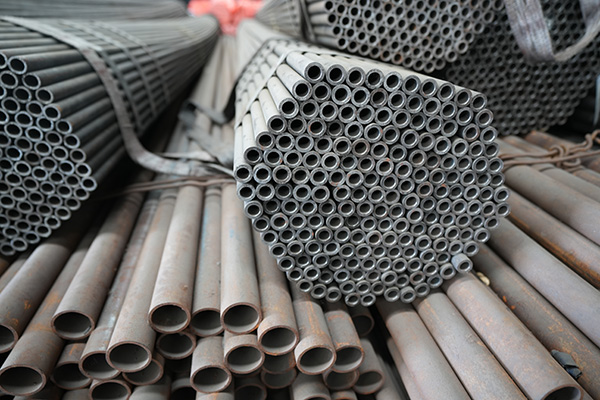
Global industrial operators continue to tighten energy efficiency requirements, which pushes heat exchanger design toward higher effectiveness and tighter approach temperatures. Achieving that performance depends on tubes with consistent wall thickness, clean surfaces and reliable dimensional tolerance - qualities that the seamless cold drawn route delivers particularly well.
Understanding the Two Specifications
ASTM A179 / ASME SA179 covers seamless cold drawn low carbon steel tubes for tubular heat exchangers, condensers and similar heat transfer apparatus. ASTM A210 / ASME SA210 covers seamless medium carbon steel boiler and superheater tubes, with Grade A1 and Grade C being the common choices. In practice:
ASTM A179 - the standard choice for heat exchangers, condensers, evaporators and air coolers where the tube is expanded or welded into a tubesheet
ASTM A210 Grade A1 - used for boiler and heat recovery service at moderate pressure and temperature
ASTM A210 Grade C - higher strength variant for superheaters, boiler banks and higher pressure heat recovery duty
Key mechanical properties for A179 include minimum tensile strength of 325 MPa, minimum yield strength of 180 MPa and minimum elongation of 35%, the ductility being essential for tube expansion and bending operations.
Why Dimensional Accuracy Matters in Heat Exchanger Service
Heat exchanger performance is directly sensitive to wall thickness. Thicker walls reduce the overall heat transfer coefficient; thinner walls reduce pressure capability and corrosion allowance. Cold drawn seamless tube holds tight tolerance on both OD and wall thickness, which delivers:
Predictable heat transfer performance matching the thermal design calculation
Consistent expansion behaviour during tube-to-tubesheet jointing
Reliable fit in baffle holes, reducing vibration and fretting damage
Uniform flow distribution and pressure drop across the bundle
Mandatory Testing Under ASTM A179
The specification requires a defined test regime that buyers should confirm is fully implemented:
Hydrostatic or non-destructive electric testing on each tube
Flattening test to verify ductility and soundness
Flaring test to confirm the tube can be expanded into a tubesheet
Flange test where specified
Hardness testing to confirm softness compatible with expansion
Tensile testing per lot
Typical Applications
Surface condensers and feedwater heaters in thermal power plants
Shell and tube heat exchangers in refineries and petrochemical complexes
Air cooled heat exchangers and finned tube bundles
Process coolers, intercoolers and aftercoolers in compressed air and gas systems
Evaporators and condensers in refrigeration and desalination plants
HVAC and district heating heat exchange equipment
Fabrication: Tube-to-Tubesheet Jointing
Most service problems originate at the joint rather than in the tube body. Successful fabrication requires clean tube ends, controlled expansion - typically 5% to 10% wall reduction - and, for critical service, seal welding with qualified procedures. Tubes should be supplied with ends square, deburred and free of scale, and should be stored dry to avoid pre-service corrosion that compromises expansion quality.
Vibration is the other major life limiter. Correct baffle spacing, adequate support and controlled flow velocity prevent the flow-induced vibration that causes mid-span tube collision and wear.
Manufacturing and Quality Control
A dependable heat exchanger tube supplier follows a disciplined sequence:
Billet and raw material verification with spectrographic chemistry
Hot piercing and rolling to hollow shell
Cold drawing or cold rolling to final size with controlled reduction per pass
Intermediate and final heat treatment to achieve required softness and ductility
Dimensional inspection of OD, wall thickness, concentricity, length and straightness
Hydrostatic or eddy current testing on every tube
Destructive sampling - flattening, flaring, flange, hardness and tensile tests
Surface protection, end capping and export packaging
Marking and certification to EN 10204 3.1 or 3.2 with heat traceability
Conclusion
Heat exchanger reliability is a function of tube consistency long before it is a function of installation skill. ASTM A179 and A210 seamless steel tubes provide the dimensional accuracy, ductility and tested soundness that condensers, coolers and process exchangers need, whether the tube is expanded, welded or finned. Working with an established China seamless heat exchanger tube manufacturer that cold draws to tight tolerance, tests every length and supplies full certification keeps thermal equipment performing to its design duty.
William Carter
Heat Transfer Equipment Engineer, Baoyang Pipeline
William Carter is a heat transfer equipment engineer at Cangzhou Baoyang Pipeline Equipment Co., Ltd. with thirteen years of experience in heat exchanger and condenser applications. He works with equipment fabricators and plant engineers on tube specification, dimensional tolerance, tube-to-tubesheet jointing and testing requirements.