

Pipeline projects demand materials that perform without failure over decades of service. A single defective pipe in a transmission line can trigger catastrophic leaks, environmental damage, and enormous repair costs. That is why the steel pipe supply chain treats quality control as a non-negotiable discipline, not a bureaucratic exercise. Steel pipe factories invest heavily in testing infrastructure to verify every batch before it leaves the production floor.
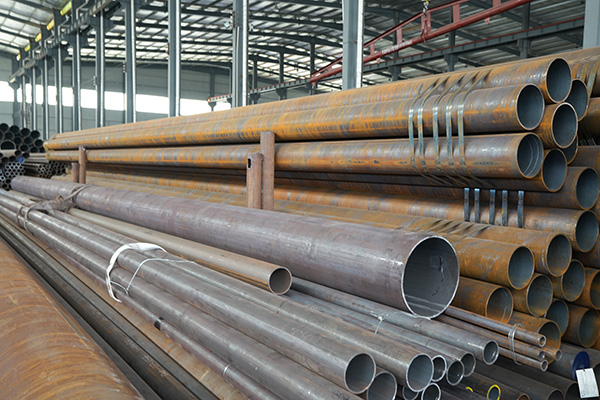
Chemical Analysis: Knowing What Goes Into the Steel
Before any mechanical testing begins, laboratories verify the chemical composition of each heat or lot. Spectrometric analysis determines the percentages of carbon, manganese, phosphorus, sulfur, and alloying elements such as chromium, molybdenum, and nickel. For API 5L Grade B or X42 through X70 line pipe, the carbon equivalent value must stay below specific thresholds to ensure weldability and toughness. A typical API 5L X65 composition limits carbon to a maximum of 0.28%, manganese to 1.40%, and phosphorus to 0.030% maximum. Factories hold each heat to tighter internal limits, often capping phosphorus at 0.020% for improved notch toughness in sour service applications. Suppliers that cannot produce test reports confirming compliance with specified composition ranges should not receive material for pipeline use.
Tensile Testing: Measuring Strength Under Load
Mechanical properties define whether a steel pipe can withstand operational stresses without permanent deformation or rupture. Tensile testing pulls a machined specimen to failure, recording yield strength, tensile strength, and elongation. API 5L specifications require a minimum yield strength of 448 MPa for Grade X65 and 531 MPa for Grade X70, measured at 0.5% total strain under the extensometer. Elongation must reach at least the specified percentage based on the gauge length-to-cross-sectional-area ratio, typically around 20% for standard wall thicknesses. A manufacturer must conduct tensile tests on a per-heat or per-lot basis, reporting the actual values against specification limits. Pipes falling below required yield or tensile thresholds get rejected, regraded, or subjected to further investigation before any supply commitment.
Impact Testing: Assessing Toughness at Operating Temperatures
Pipeline routes cross frozen tundra, desert heat, and deepwater seabeds. Steel must resist brittle fracture at the lowest expected service temperature. Charpy V-notch impact testing measures absorbed energy by striking a notched specimen with a swinging pendulum at a specified temperature. API 5L PSL-2 pipe requires a minimum average absorbed energy of 27 J for transverse specimens at the design temperature, with a single value permitted no lower than 20 J. For ASTM A333 Grade 6 low-temperature service pipe used in cryogenic applications, the Charpy test temperature drops to minus 45 °C, requiring 18 J minimum average absorbed energy. Suppliers performing impact testing at only room temperature miss critical data about material behavior where it matters most.
Dimensional Inspection and Hydrostatic Testing
Out-of-tolerance dimensions create problems during fabrication, welding, and installation. Factories measure wall thickness using ultrasonic gauges at multiple points around the circumference, checking against the specified minimum and maximum values. Outside diameter, ovality, and straightness receive similar scrutiny. A manufacturer performing proper dimensional inspection records every measurement and maintains traceability back to the pipe's heat number and production date.
Hydrostatic testing applies internal water pressure to every finished pipe, pressurizing it to a level that stresses the pipe wall to a percentage of the specified minimum yield strength. API 5L typically requires test pressures that produce a hoop stress of at least 90% of SMYS for the shorter test duration hold or 90% of SMYS for shorter durations, depending on the product specification level. The test holds pressure for a minimum of 10 seconds with no visible leakage or rupture permitted. This test validates the pipe's integrity under actual pressure conditions and serves as the final gate before dispatch.
Certification Documentation and Material Traceability
Quality control extends far beyond the factory floor into documentation systems. Material Test Reports document every test result, chemical composition, heat number, and compliance statement. MTRs travel with the pipe from the mill through fabrication, coating, and installation. Buyers and project engineers rely on these documents for regulatory compliance, insurance requirements, and long-term asset management. A reputable supplier delivers MTRs that reference the specific standards invoked, such as API 5L 46th Edition, ASTM A370 for mechanical testing, and ASTM E415 for chemical analysis. Certificates must include actual numeric results, not merely a pass/fail statement. Traceability chains linking each finished pipe back to its raw material heat ensure accountability throughout the supply chain.
Choosing a supplier with rigorous quality control protocols protects pipeline projects from costly field failures, rework, and schedule delays. Factories that invest in comprehensive testing from chemical analysis through hydrostatic validation supply material that engineers can trust under pressure.
References
American Petroleum Institute, API Specification 5L: Specification for Line Pipe, 46th Edition, API Publishing Services, 2018.
ASTM International, ASTM A370: Standard Test Methods and Definitions for Mechanical Testing of Steel Products, ASTM International, 2022.
ASTM International, ASTM A333/A333M: Standard Specification for Seamless and Welded Steel Pipe for Low-Temperature Service, ASTM International, 2021.
Branicki, M., Pipe Technology Handbook for Industrial Engineers, Elsevier Science & Technology Books, 2019.