

In industrial operations—from petrochemical processing and power generation to machinery manufacturing and fluid transport—industrial alloy steel seamless pipes play a critical role in ensuring structural integrity, safety, and long-term performance. The key to selecting the right pipe for your project lies in understanding industrial alloy steel seamless pipe standard specifications: these internationally recognized standards define the material composition, manufacturing processes, mechanical properties, and quality requirements that govern every aspect of alloy steel seamless pipes. This guide breaks down the most widely used standards (ASTM, EN), their corresponding product models, core specifications, and practical applications, helping industrial buyers, engineers, and project managers make informed decisions.
Why Industrial Alloy Steel Seamless Pipe Standards Matter
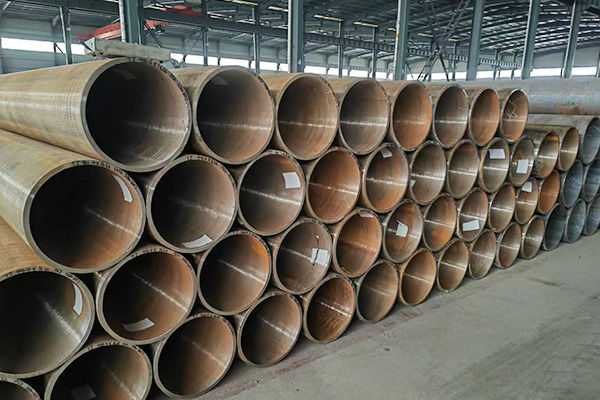
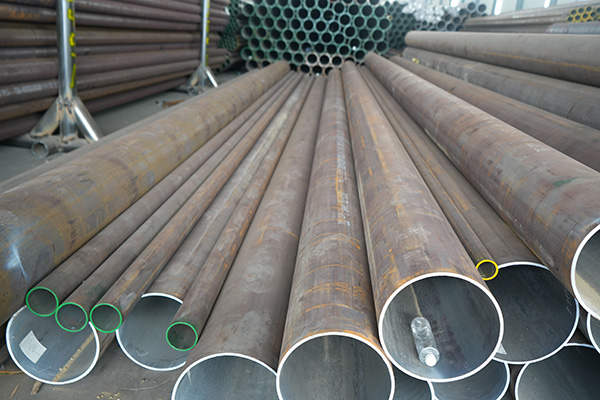
Industrial environments demand consistency, reliability, and compliance—especially for seamless pipes that often operate under high pressure, extreme temperatures, or corrosive conditions. Standard specifications eliminate ambiguity in product quality, ensuring that pipes from different manufacturers meet uniform performance criteria. For industrial buyers, adhering to recognized standards means:
Guaranteed compatibility with existing industrial systems and equipment.
Reduced risk of pipe failure, leaks, or safety hazards in critical operations.
Compliance with global industrial regulations and project certification requirements.
Easier comparison of product quality and pricing across suppliers.
The most commonly referenced standards for industrial alloy steel seamless pipes are ASTM (American Society for Testing and Materials) and EN (European Norm), each with specialized series tailored to different industrial use cases. Below is a detailed breakdown of these standards, their key models, and core specifications.
ASTM Standards for Industrial Alloy Steel Seamless Pipes (Most Widely Used)
ASTM standards are globally recognized for their rigor and versatility, covering a wide range of alloy steel seamless pipes for industrial applications. The most relevant series include ASTM A335, ASTM A213, and ASTM A519, each with distinct models designed for specific operating conditions.
1. ASTM A335: Alloy Steel Seamless Pipes for High-Temperature Service
ASTM A335 is the primary standard for seamless ferritic alloy steel pipes intended for high-temperature, high-pressure industrial applications—making it ideal for power generation, petrochemical, and boiler systems. This standard defines chemical composition, tensile strength, yield strength, and heat treatment requirements for each model. Key Product Models & Core Specifications:
ASTM A335 P11: Chromium-molybdenum alloy (1.25% Cr, 0.5% Mo) with a maximum service temperature of 593°C (1100°F). Tensile strength ≥ 414 MPa, yield strength ≥ 207 MPa. Widely used in medium-pressure steam pipelines and heat exchangers in general industrial settings.
ASTM A335 P22: Chromium-molybdenum alloy (2.25% Cr, 1% Mo) with enhanced high-temperature creep resistance (max service temp 649°C / 1200°F). Tensile strength ≥ 483 MPa, yield strength ≥ 241 MPa. Suitable for high-pressure industrial piping, boiler tubes, and petrochemical fluid transport.
ASTM A335 P91: High-chromium alloy (9% Cr, 1% Mo, 0.2% V) with exceptional high-temperature performance (max service temp 650°C / 1200°F). Tensile strength ≥ 586 MPa, yield strength ≥ 414 MPa. Used in supercritical power plants, high-temperature industrial equipment, and extreme-pressure fluid systems.
2. ASTM A213: Alloy Steel Seamless Tubes for Boilers & Heat Exchangers
ASTM A213 specifies seamless ferritic and austenitic alloy steel tubes for industrial boilers, superheaters, and heat exchangers—focusing on high-temperature and corrosion resistance. Unlike ASTM A335 (which covers “pipes”), A213 applies to “tubes” for heat transfer applications, with stricter dimensional accuracy requirements. Key Product Models & Core Specifications:
ASTM A213 T22: Chromium-molybdenum alloy (2.25% Cr, 1% Mo), equivalent to ASTM A335 P22. Max service temp 649°C, tensile strength ≥ 483 MPa. Used in industrial boiler tubes, heat exchangers, and high-temperature fluid transport systems.
ASTM A213 T91: High-chromium alloy (9% Cr, 1% Mo, 0.2% V), equivalent to ASTM A335 P91. Max service temp 650°C, tensile strength ≥ 586 MPa. Ideal for superheaters, reheaters in power plants, and high-temperature industrial heat exchangers.
ASTM A213 TP316L: Austenitic stainless steel alloy (16% Cr, 10% Ni, 2% Mo) with excellent corrosion resistance. Max service temp 871°C, tensile strength ≥ 485 MPa. Suitable for chemical industrial heat exchangers and corrosive fluid transport tubes.
3. ASTM A519: Alloy Steel Seamless Mechanical Tubing
ASTM A519 covers seamless carbon and alloy steel mechanical tubing—designed for structural and mechanical industrial applications (not pressure piping). This standard prioritizes dimensional accuracy, surface finish, and mechanical properties for components like shafts, cylinders, and industrial machinery parts. Key Product Models & Core Specifications:
ASTM A519 4130: Chromium-molybdenum alloy (1% Cr, 0.25% Mo) with high tensile strength (670-900 MPa) and toughness. Used in high-strength industrial machinery components, hydraulic cylinders, and structural supports.
ASTM A519 4140: Chromium-molybdenum alloy (1% Cr, 0.25% Mo) with enhanced hardness and wear resistance. Tensile strength 690-930 MPa, suitable for industrial gears, shafts, and heavy-duty mechanical parts.
EN Standards for Industrial Alloy Steel Seamless Pipes (European Norms)
EN standards (European Norms) are widely adopted in Europe and global projects requiring compliance with European industrial regulations. The most relevant standard for industrial alloy steel seamless pipes is EN 10216, which is divided into parts based on temperature and material properties[4].
1. EN 10216-2: Alloy Steel Seamless Tubes for High-Temperature Pressure Service
EN 10216-2 specifies technical delivery conditions for non-alloy and alloy steel seamless tubes with elevated temperature properties—used in industrial pressure systems, boilers, and high-temperature fluid transport. It is fully equivalent to BS EN 10216-2 (British Standard), with only minor differences in publishing organization[4]. Key Product Models & Core Specifications:
EN 10216-2 16Mo3 (Steel No. 1.5415): Molybdenum alloy steel with max service temp 530°C. Tensile strength 410-580 MPa, yield strength ≥ 220 MPa. Used in industrial boilers, heat exchangers, and medium-temperature pressure piping.
EN 10216-2 10CrMo9-10 (Steel No. 1.7380): Chromium-molybdenum alloy (9% Cr, 1% Mo), equivalent to ASTM A335 P91. Max service temp 650°C, tensile strength ≥ 585 MPa. Suitable for high-temperature, high-pressure industrial systems and power generation equipment.
EN 10216-2 25CrMo4 (Steel No. 1.7218): Chromium-molybdenum alloy (1% Cr, 0.25% Mo) with good toughness. Tensile strength 490-650 MPa, used in industrial mechanical components and medium-pressure piping.
2. EN 10216-3: Alloy Fine Grain Steel Seamless Tubes
EN 10216-3 covers weldable alloy fine grain steel seamless tubes for industrial pressure applications—focusing on high strength and ductility. These tubes are used in heavy-duty industrial machinery, structural supports, and medium-pressure fluid transport systems.
Key Specification Requirements for Industrial Alloy Steel Seamless Pipes
Regardless of the standard (ASTM or EN), all industrial alloy steel seamless pipes must meet strict specification requirements to ensure performance and safety. These requirements include:
1. Chemical Composition
Alloying elements (chromium, molybdenum, nickel, vanadium) are strictly controlled to achieve desired properties (corrosion resistance, high-temperature strength, toughness). For example, ASTM A335 P22 requires 2.00-2.50% chromium and 0.90-1.10% molybdenum, while EN 10216-2 16Mo3 requires 0.70-1.00% molybdenum[3]. Impurity elements (sulfur, phosphorus) are limited to ≤ 0.035% to avoid structural weaknesses.
2. Mechanical Properties
Standards define minimum tensile strength, yield strength, elongation, and hardness. For example: ASTM A335 P11: Tensile ≥ 414 MPa, Yield ≥ 207 MPa, Elongation ≥ 30%EN 10216-2 16Mo3: Tensile 410-580 MPa, Yield ≥ 220 MPa, Elongation ≥ 22%
3. Manufacturing Process
All standards require a seamless extrusion process (no welded joints) to eliminate leakage risks. Manufacturing steps include electric furnace steelmaking, hot/cold extrusion, heat treatment (annealing, normalizing, tempering), and dimensional calibration to ensure uniform wall thickness and surface finish[4].
4. Quality Testing
Mandatory tests include: Chemical composition analysis (spectroscopic testing) to verify alloy content.Mechanical testing (tensile, yield, elongation) to confirm strength properties.Non-destructive testing (NDT): Ultrasonic testing (UT) for internal defects, magnetic particle testing (MT) for surface defects.Hydrostatic testing: Pipes are pressure-tested with water to ensure leak resistance (typically 1.5x the maximum working pressure).
References
GB/T 7714:American Society for Testing and Materials (ASTM). (2022). ASTM A335/A335M-22: Standard Specification for Alloy-Steel Seamless Pipes for High-Temperature Service. ASTM International.
MLA:American Society for Testing and Materials (ASTM). (2023). ASTM A213/A213M-23: Standard Specification for Seamless Ferritic and Austenitic Alloy-Steel Tubes for Boilers, Superheaters, and Heat Exchangers. ASTM International.
APA:European Committee for Standardization (CEN). (2019). EN 10216-2:2019 - Seamless Steel Tubes for Pressure Purposes - Part 2: Non-Alloy and Alloy Steel Tubes with Specified Elevated Temperature Properties. CEN European Standards.