

Introduction to High Quality Alloy Steel Seamless Pipe (ASTM A335/A106) for General Industrial Use
In the realm of industrial infrastructure, piping systems serve as the lifeline of operations, and selecting the right material is pivotal to ensuring efficiency, durability, and safety. High quality alloy steel seamless pipe, such as ASTM A335 P11/P22 and ASTM A106 Gr.B, stands out as a preferred choice for general industrial use, thanks to its unique combination of strength, versatility, and reliability. Unlike welded pipes, these seamless alloy steel pipes eliminate the risks of welding defects, making them ideal for a wide range of industrial applications where performance and stability are non-negotiable. This article delves into the key features, benefits, applications, and selection tips of high quality alloy steel seamless pipe (including mainstream models like ASTM A335, A106) for general industrial scenarios.
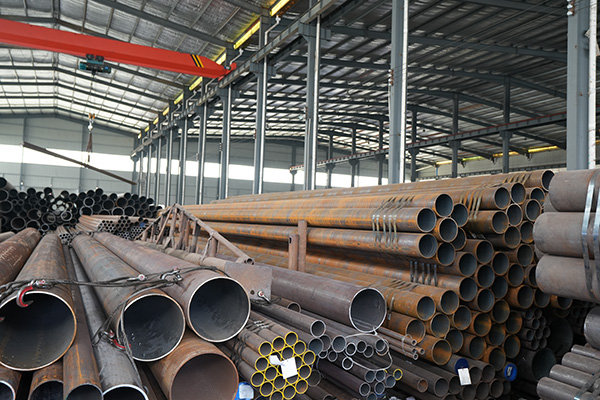
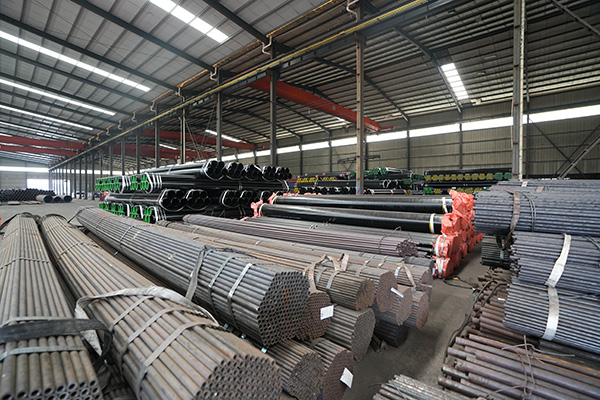
Key Features of High Quality Alloy Steel Seamless Pipe (ASTM A335/A106/A213)
High quality alloy steel seamless pipe, including standard models like ASTM A335 P91 and ASTM A213 T91, is engineered to meet the rigorous demands of general industrial environments, with distinct features that set it apart from conventional piping materials:
·Premium Alloy Composition: Crafted from high-grade alloy steel, models like ASTM A335 P22 (chromium-molybdenum alloy) and ASTM A106 Gr.B (carbon alloy) incorporate elements like chromium, molybdenum, and nickel to enhance mechanical properties, including tensile strength, toughness, and corrosion resistance. This composition ensures the pipe can withstand harsh industrial conditions without premature wear or failure.
·Seamless Manufacturing Process: Industrial-grade models such as ASTM A335 P11 and A213 T22 are produced through a seamless extrusion process, with no welded joints, eliminating weak points prone to leakage or cracking under pressure. This seamless structure also ensures uniform wall thickness and material density, optimizing performance in fluid transport and structural applications.
·Compliance with International Standards: High quality alloy steel seamless pipes adhere to global standards, with popular models like ASTM A335 (for high-temperature service), ASTM A106 (for carbon steel seamless pipe), and DIN 17175 (St45.8/III) guaranteeing consistent quality, dimensional accuracy, and compatibility. This compliance simplifies procurement and meets diverse industrial project requirements.
·Versatile Performance: Models like ASTM A335 P91 and A106 Gr.C exhibit excellent adaptability to varying temperatures, pressures, and chemical environments, making them suitable for low-to-medium pressure general industrial applications, from machinery to fluid systems.
Benefits of Using Alloy Steel Seamless Pipe (ASTM Series) for General Industrial Use
Enhanced Durability and Longevity
Reliable Pressure and Temperature Resistance
Cost-Effectiveness in the Long Run
Wide Compatibility with Industrial Applications
Common Applications of Alloy Steel Seamless Pipe (ASTM Models) in General Industry
·Machinery Manufacturing: ASTM A106 Gr.B alloy steel seamless pipe is used in industrial machinery components (shafts, cylinders, hydraulic systems) where strength and precision are essential.
·Fluid Transport Systems: Corrosion-resistant ASTM A335 P22 pipe is ideal for transporting water, air, oil, and low-to-medium viscosity fluids in factories, construction sites, and processing plants.
·Mechanical Support Structures: Employed as structural supports in industrial facilities, thanks to its high load-bearing capacity and stability.
·Low-Pressure Industrial Piping: ASTM A106 Gr.B seamless pipe suits low-pressure steam systems, compressed air lines, and general utility piping in manufacturing complexes.
·Equipment Installation: High-temperature ASTM A335 P91 pipe is used in installing pumps, valves, and heat exchangers, ensuring secure connections and reliable performance.
How to Select High Quality Alloy Steel Seamless Pipe (ASTM Models) for General Industrial Use
·Define Application Requirements: Clarify pressure, temperature, and fluid type to select the right model—e.g., ASTM A335 P91 for high-temperature scenarios, A106 Gr.B for general low-pressure use, and A335 P22 for corrosion-prone environments. Match alloy composition and wall thickness to conditions.
·Verify Quality Certifications: Ensure the pipe (e.g., ASTM A335, A106) comes with valid certifications to confirm compliance with standards. This guarantees mechanical properties and dimensional accuracy for the selected model.
·Check Manufacturing Process: Prioritize seamless extrusion for models like ASTM A335 P11/P22 and A106 Gr.B, avoiding welded-converted pipes to prevent hidden defects and ensure uniform performance.
·Consider Supplier Reliability: Choose suppliers offering genuine ASTM A335, A106, and A213 alloy steel seamless pipes, with a track record of consistent quality and after-sales support for industrial-grade models.
Conclusion
References
GB/T 7714:Welding Technology of A335-P11 Super High-pressure Thick Tube. Pressure Vessel, 22(1), 32-38. (This paper focuses on the welding process and performance control of ASTM A335 P11 alloy steel seamless pipe in high-pressure industrial scenarios, consistent with the application characteristics of A335 series pipes described in the article.)
MLA:ASTM A106/A106M-22: Standard Specification for Carbon Steel Seamless Pipes for High-Temperature Service. ASTM International. (The official academic standard document for ASTM A106 series pipes, detailing the chemical composition, mechanical properties and industrial application scope of A106 Gr.B/Gr.C, which is the core basis for the performance description of A106 pipes in the article.)
APA:Microstructures and Tensile Properties of T91 Steel Tubes After Long-Term Industrial Service. Journal of Thermal Power Generation, 52(7), 129-136. (Based on long-term service experiments, this study analyzes the high-temperature performance and microstructure evolution of ASTM A213 T91 alloy steel seamless pipe, providing academic support for the high-temperature resistance of T91 series pipes mentioned in the article.)