

In modern oil, gas, and energy infrastructure, Transmission Line Pipe is the backbone of long-distance fluid transportation systems. These pipelines operate under high pressure, variable temperature, and complex environmental conditions, making material selection a critical factor for safety and performance. Among many grades, API 5L X70 Transmission Line Pipe is widely adopted for its optimized chemical composition and balanced mechanical properties.
Supported by professional manufacturer production and large-scale factory production capacity, API 5L X70 Transmission Line Pipe is designed to meet strict international requirements while enabling stable bulk supply for global transmission projects.
This article explains the chemical composition of API 5L X70 Transmission Line Pipe, how alloying elements influence performance, and why production control matters for reliable pipeline systems.
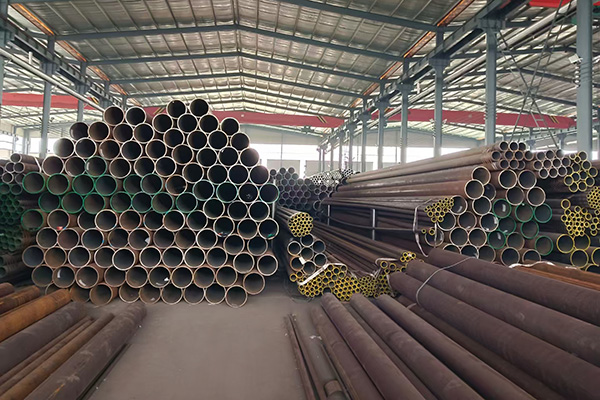
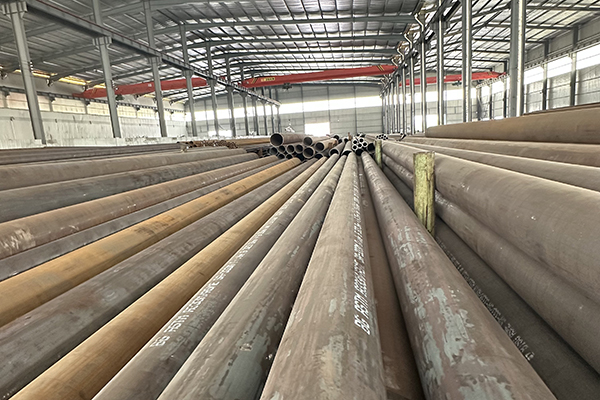
Understanding API 5L X70 Transmission Line Pipe
API 5L X70 is a high-strength low-alloy (HSLA) steel grade defined under the API 5L specification for pipeline transportation systems. The “X70” designation indicates a minimum yield strength of 70,000 psi, making it suitable for high-pressure transmission applications.
Transmission Line Pipe manufactured from this grade is primarily used for long-distance oil, gas, water, and chemical transport. Its success comes not only from mechanical strength but also from carefully engineered chemical composition that balances toughness, weldability, and corrosion resistance.
Through controlled factory production, steelmaking, rolling, forming, welding, and inspection are integrated to deliver uniform Transmission Line Pipe performance across large pipeline networks.
Typical Chemical Composition of API 5L X70
The chemical design of API 5L X70 Transmission Line Pipe focuses on achieving high strength without sacrificing ductility or weldability. Although exact limits vary slightly by specification and project, typical composition includes:
·Carbon (C): Low carbon content improves weldability and toughness.
·Manganese (Mn): Enhances strength and hardenability while supporting uniform microstructure.
·Silicon (Si): Acts as a deoxidizer and contributes to strength.
·Niobium (Nb), Vanadium (V), Titanium (Ti): Microalloying elements that refine grain size and improve yield strength.
·Phosphorus (P) & Sulfur (S): Controlled to very low levels to reduce brittleness and improve corrosion performance.
This optimized alloy system allows Transmission Line Pipe to handle internal pressure while remaining resistant to cracking and deformation.
With stable manufacturer production, composition control is strictly monitored from molten steel to final pipe, ensuring every batch meets performance expectations.
Role of Carbon and Microalloy Elements
Carbon is one of the most influential elements in pipeline steel. In API 5L X70 Transmission Line Pipe, carbon is kept relatively low to maintain good weldability and reduce heat-affected zone cracking during installation.
Instead of relying heavily on carbon for strength, X70 uses microalloying elements such as niobium, vanadium, and titanium. These elements promote fine-grained microstructures during rolling and heat treatment. Grain refinement increases strength without compromising toughness.
This metallurgical strategy allows Transmission Line Pipe to perform reliably in cold climates, seismic zones, and high-pressure transmission environments.
Through advanced factory production, thermomechanical control processes ensure microalloy elements work effectively throughout the pipe wall thickness.
Chemical Composition and Weldability
Weldability is critical for any Transmission Line Pipe because thousands of joints are created during pipeline construction. Poor weldability increases the risk of cracking, hydrogen damage, and costly repairs after burial or commissioning.
API 5L X70 Transmission Line Pipe is designed with a controlled carbon equivalent (CE) value. Lower CE reduces hardening in the heat-affected zone and improves field welding performance.
The balanced chemical composition allows for:
·Reduced preheating requirements
·Stable arc behavior
·Lower susceptibility to cold cracking
·Consistent weld mechanical properties
With automated manufacturer production, chemistry control ensures pipes arrive on site ready for efficient welding and installation, supporting faster project execution.
Influence of Alloy Design on Corrosion Resistance
While coatings provide the primary barrier against corrosion, the steel chemistry of Transmission Line Pipe also influences long-term durability. Low sulfur and phosphorus levels reduce the formation of inclusions that act as corrosion initiation points.
Manganese and microalloy elements contribute to uniform microstructure, minimizing galvanic potential variations across the pipe surface. This improves the performance of external coatings and cathodic protection systems.
For buried and underground transmission projects, chemically stable Transmission Line Pipe supports longer service life and lower maintenance cost.
During factory production, surface quality and chemical consistency are verified before coating application to ensure maximum corrosion protection performance.
Chemical Composition and Mechanical Performance
The strength and toughness of API 5L X70 Transmission Line Pipe are directly tied to its chemistry. The interaction between carbon, manganese, and microalloying elements determines yield strength, tensile strength, and impact resistance.
Fine-grained microstructures created through composition control and thermomechanical rolling improve:
·Resistance to brittle fracture
·Fatigue life under cyclic pressure
·Deformation tolerance during ground movement
This makes Transmission Line Pipe suitable for cross-country pipelines, offshore landfalls, urban underground networks, and high-pressure transmission corridors.
With modern manufacturer production, each heat of steel is analyzed and tested to ensure chemical and mechanical consistency across bulk supply orders.
Importance of Production Control in Chemical Accuracy
Even the best alloy design fails without reliable production control. API 5L X70 Transmission Line Pipe depends on accurate chemistry at every stage, from steelmaking to forming and welding.
Advanced factory production integrates:
·Spectrometric analysis of molten steel
·Online composition monitoring
·Controlled rolling and cooling
·Final chemical verification before shipment
This ensures that every Transmission Line Pipe delivered for large infrastructure projects meets chemical limits and performance standards.
Stable production capability also supports mass manufacturing while maintaining consistent quality for long-distance pipeline construction.
Applications Driven by Chemical Reliability
Because of its controlled composition, API 5L X70 Transmission Line Pipe is widely used in:
·Oil and gas trunk pipelines
·High-pressure natural gas networks
·Water and chemical transmission systems
·Energy infrastructure corridors
The chemical stability of Transmission Line Pipe allows it to operate in deserts, coastal regions, frozen soil, and seismic zones with reduced failure risk.
With scalable manufacturer production and bulk delivery capability, large pipeline projects benefit from uniform chemistry and predictable performance across thousands of kilometers.
Long-Term Value of API 5L X70 Transmission Line Pipe
Investing in chemically optimized Transmission Line Pipe reduces lifecycle cost. Better weldability lowers installation expenses, corrosion resistance reduces maintenance, and mechanical stability minimizes operational risk.
For transmission systems designed for decades of service, API 5L X70 Transmission Line Pipe offers a strong return on investment through durability and performance reliability.
Backed by professional factory production and consistent manufacturer production capacity, this grade supports modern infrastructure development with dependable bulk supply and quality assurance.
Conclusion
The chemical composition of API 5L X70 Transmission Line Pipe is the foundation of its performance in high-pressure, long-distance pipeline systems. By balancing low carbon content with microalloying elements, X70 achieves excellent weldability, strength, toughness, and corrosion resistance.
Through advanced manufacturer production and large-scale factory production, Transmission Line Pipe is supplied with stable chemistry, precise control, and consistent quality for global transmission projects.
For energy and infrastructure systems requiring safe, durable, and efficient transportation, API 5L X70 Transmission Line Pipe delivers reliable performance supported by optimized chemical design and dependable production capability.
References
GB/T 7714:Hanafi Z H, Jamaludin N, Abdullah S, et al. Acoustic emission study of corrosion fatigue and fatigue for API 5L X70 gas pipeline steel[J]. Applied Mechanics and Materials, 2012, 138: 635-639.
MLA:Hanafi, Z. H., et al. "Acoustic emission study of corrosion fatigue and fatigue for API 5L X70 gas pipeline steel." Applied Mechanics and Materials 138 (2012): 635-639.
APA:Hanafi, Z. H., Jamaludin, N., Abdullah, S., Yusof, M. F. M., & Zain, M. S. M. (2012). Acoustic emission study of corrosion fatigue and fatigue for API 5L X70 gas pipeline steel. Applied Mechanics and Materials, 138, 635-639.