

In large-scale energy transmission and infrastructure construction, Buried Line Pipe is a fundamental component used to transport oil, gas, water, and chemicals safely beneath the surface. As underground pipeline networks expand worldwide, selecting the right material becomes critical for long-term performance. Among the available grades, API 5L X70Q Buried Line Pipe has become a preferred solution because of its strength, durability, and adaptability to complex underground environments.
Supported by professional manufacturer production and controlled factory processing, Buried Line Pipe made from API 5L X70Q steel ensures reliable bulk supply for modern pipeline projects. With stable factory production capacity, this type of buried pipeline supports long-distance transmission with consistent quality and performance.
This article explains what Buried Line Pipe is in API 5L X70Q applications, its technical characteristics, installation benefits, and why production capability matters for underground pipeline systems.
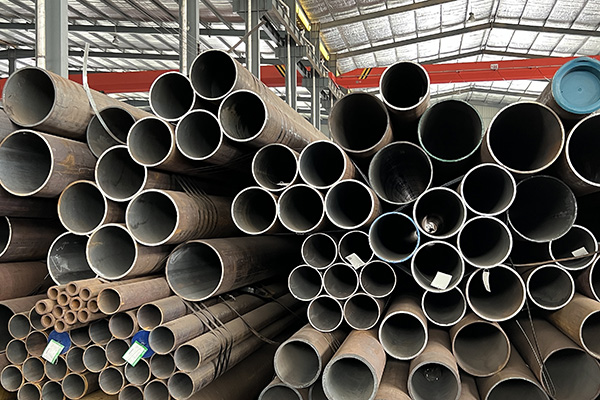

Understanding Buried Line Pipe in Pipeline Engineering
Buried Line Pipe refers to steel pipelines installed underground to transport fluids while being protected from environmental exposure and external damage. Unlike above-ground pipelines, buried systems are designed to resist soil pressure, moisture, corrosion, temperature variation, and mechanical loading over long service periods.
In API 5L X70Q applications, Buried Line Pipe is used mainly for high-pressure oil and gas transmission. The underground placement reduces visual impact, improves safety, and protects pipelines from weather and accidental damage.
Through advanced factory production, pipes are manufactured with controlled chemistry and geometry, ensuring each Buried Line Pipe section performs consistently once buried and connected into long-distance networks.
What Makes API 5L X70Q Suitable for Buried Line Pipe?
API 5L X70Q is a high-strength pipeline steel grade specified under the API 5L standard. The “X70” designation indicates high yield strength, while the “Q” condition represents quenched and tempered heat treatment for enhanced toughness and stability.
For Buried Line Pipe, these properties are essential. Underground pipelines must handle internal pressure while also resisting deformation from soil loads and ground movement. API 5L X70Q provides an excellent balance between strength, ductility, and fracture resistance.
With standardized manufacturer production, the steel plates or coils are processed through forming, welding, heat treatment, and inspection stages to produce uniform, reliable Buried Line Pipe for large pipeline projects.
Mechanical Performance for Underground Conditions
One of the most important advantages of API 5L X70Q Buried Line Pipe is its strong mechanical performance. High yield and tensile strength allow the pipe to maintain shape under heavy external and internal forces.
Additionally, the quenched and tempered structure improves impact resistance, which is especially important in low-temperature or seismic regions. Underground pipelines may face soil shifting, vibration, and pressure variation, and high-performance Buried Line Pipe reduces the risk of cracking or failure.
Through controlled factory production, every batch of pipes undergoes mechanical testing to ensure compliance with engineering and safety requirements before shipment for installation.
Corrosion Protection for Buried Line Pipe
Since Buried Line Pipe operates in soil environments, corrosion protection is one of the most critical design factors. Underground conditions often involve moisture, salts, microorganisms, and chemical exposure that can degrade unprotected steel.
API 5L X70Q Buried Line Pipe is commonly combined with external coating systems such as fusion bonded epoxy (FBE), three-layer polyethylene (3PE), or polypropylene (3PP). These coatings isolate the pipe surface from aggressive environments and significantly extend service life.
During manufacturer production, coating processes are integrated with inspection systems to ensure adhesion, thickness uniformity, and surface integrity for each Buried Line Pipe section delivered to site.
Weldability and Installation Efficiency
Installation quality directly affects the long-term reliability of Buried Line Pipe systems. API 5L X70Q steel is designed with controlled chemical composition, resulting in good weldability and reduced cracking sensitivity.
Field welding becomes faster and more consistent, helping reduce construction time while maintaining structural safety. Smooth welding behavior is essential for underground pipelines, where repair after burial is costly and complex.
With automated forming and dimensional control in factory production, Buried Line Pipe arrives ready for efficient alignment, joining, and burial, improving overall project execution efficiency.
Dimensional Precision and Quality Control
Precision is essential for pipeline flow performance and installation accuracy. API 5L X70Q Buried Line Pipe is produced with strict tolerances on outer diameter, wall thickness, and straightness.
This dimensional stability ensures smooth fluid flow and reduces stress concentration at joints. It also simplifies field installation and reduces the likelihood of misalignment.
Modern manufacturer production integrates ultrasonic testing, hydrostatic testing, and visual inspection to verify each Buried Line Pipe meets technical specifications before bulk delivery.
Typical Applications of Buried Line Pipe
Buried Line Pipe made from API 5L X70Q is widely used in:
·Long-distance oil and gas transmission pipelines
·Underground water transportation systems
·Chemical and industrial fluid networks
·Energy infrastructure and cross-country pipelines
·Buried pipelines protect the environment, reduce surface disturbance, and improve operational safety. High-strength Buried Line Pipe supports stable service in deserts, mountains, coastal areas, and frozen soil regions.
With scalable factory production capacity, large projects benefit from consistent bulk supply, minimizing construction delays and ensuring uniform pipeline quality.
Production Capability and Supply Reliability
Behind every high-performance Buried Line Pipe system is reliable production capability. From raw material control to forming, welding, heat treatment, coating, and final inspection, every step influences performance.
Advanced manufacturer production uses automated rolling mills, welding lines, heat treatment furnaces, and coating facilities to ensure uniformity across large volumes. This makes it possible to support global pipeline projects with stable quality and timely delivery.
Reliable factory production not only improves project efficiency but also reduces lifecycle risk after installation.
Long-Term Value of API 5L X70Q Buried Line Pipe
Although API 5L X70Q Buried Line Pipe represents a high-performance solution, it also offers strong long-term value. Its durability reduces replacement frequency, corrosion protection lowers maintenance costs, and stable mechanical properties improve operational safety.
For underground infrastructure designed for decades of service, selecting high-quality Buried Line Pipe leads to better performance, lower total ownership cost, and higher return on investment.
Conclusion
So, what is Buried Line Pipe in API 5L X70Q applications? It is a high-strength, corrosion-protected, precisely manufactured pipeline solution designed for safe underground transmission of oil, gas, and fluids under demanding conditions.
With professional factory production and scalable manufacturer production capacity, API 5L X70Q Buried Line Pipe supports bulk supply for global infrastructure projects while maintaining consistent quality and performance.
For modern underground pipeline systems, Buried Line Pipe made from API 5L X70Q delivers reliability, efficiency, and long-term service value backed by stable production and factory-controlled manufacturing advantages.
References
GB/T 7714:Hanafi Z H, Jamaludin N, Abdullah S, et al. Acoustic emission study of corrosion fatigue and fatigue for API 5L X70 gas pipeline steel[J]. Applied Mechanics and Materials, 2012, 138: 635-639.
MLA:Hanafi, Z. H., et al. "Acoustic emission study of corrosion fatigue and fatigue for API 5L X70 gas pipeline steel." Applied Mechanics and Materials 138 (2012): 635-639.
APA:Hanafi, Z. H., Jamaludin, N., Abdullah, S., Yusof, M. F. M., & Zain, M. S. M. (2012). Acoustic emission study of corrosion fatigue and fatigue for API 5L X70 gas pipeline steel. Applied Mechanics and Materials, 138, 635-639.