

Fundamentals of Pipe Material Selection
Selecting appropriate pipeline steel pipe requires careful consideration of numerous factors including operating pressure, temperature, fluid characteristics, and environmental conditions. Manufacturers serving the pipeline industry offer materials conforming to various specifications, with API 5L representing the dominant standard for line pipe applications. Understanding grade designations, property requirements, and cost implications enables engineers to optimize material selection for specific project requirements.
Yield strength represents the primary grade designation for API 5L line pipes. Grades from X42 through X70 provide progressively higher strength, enabling thinner wall designs and reduced material quantities for equivalent pressure capacity. Factory production costs increase with grade level, requiring careful analysis to identify the optimal grade balancing material costs against installed costs. Suppliers with technical expertise can support this optimization process.
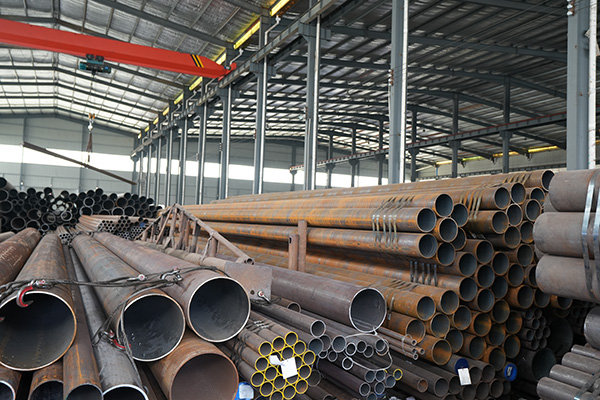
Understanding API 5L Grade Options
API 5L X42 grade serves lower-pressure applications where moderate strength provides adequate design margins. The grade offers economical material costs combined with good weldability, making it suitable for gathering systems and distribution lines. Manufacturers produce X42 in both seamless and welded forms, with electric resistance welded (ERW) pipes offering cost advantages for smaller sizes and lower-pressure applications.
Higher grades including X52, X60, X65, and X70 serve transmission applications where higher pressures justify the increased material costs. Factory production of these grades requires precise metallurgical control to achieve strength properties while maintaining weldability and toughness. Suppliers serving major transmission projects understand the importance of consistent properties and provide detailed documentation supporting material qualification.
Seamless versus Welded Pipe Selection
Seamless pipes offer advantages in applications requiring maximum pressure integrity, fatigue resistance, or stringent dimensional control. The absence of weld seams eliminates potential weak points and provides uniform properties throughout the pipe wall. Manufacturers recommend seamless construction for critical applications where failure consequences are severe. Factory production capacity for seamless pipes typically concentrates in medium and smaller sizes, with larger diameters generally produced by welding processes.
Welded pipes offer cost advantages for many applications, particularly in larger diameters where seamless production becomes impractical or uneconomical. Modern welding processes including ERW, LSAW, and SSAW produce pipes meeting stringent quality requirements when properly controlled. Suppliers offer various welded options with different characteristics suitable for specific applications. Factory quality control processes including weld seam inspection ensure product integrity.
Quality and Specification Considerations
API 5L PSL1 (Product Specification Level 1) requirements provide baseline quality for non-critical applications. PSL2 adds enhanced requirements including mandatory impact testing, more stringent chemistry controls, and additional non-destructive examination. Manufacturers recommend PSL2 for transmission pipelines where higher quality provides operational safety benefits. Factory testing protocols ensure conformance to all specified requirements.
Additional specification requirements may apply for specific service conditions. Sour service per NACE MR0175 requires materials resistant to sulfide stress cracking. Low-temperature service requires impact testing at minimum design temperatures. Offshore applications may require enhanced weld seam inspection and third-party witnessing of testing. Suppliers with broad application experience can advise on appropriate specification requirements.
Supplier Selection Criteria
Selecting the right pipeline pipe supplier involves evaluating manufacturing capabilities, quality performance, technical support, and commercial factors. Manufacturers with integrated production offer advantages in quality control and scheduling flexibility. API monogram licensing demonstrates quality system compliance. References from similar projects provide insight into delivery performance and service quality.
Technical capabilities differentiate suppliers beyond basic product availability. Engineering support helps optimize specifications and resolve technical issues. Logistics expertise ensures on-time delivery to project sites. Responsive customer service addresses questions and concerns promptly. Long-term partnerships with capable manufacturers support successful project execution and operational excellence for pipeline infrastructure worldwide.
References
American Petroleum Institute. API 5L Specification for Line Pipe, 46th Edition.
American Society of Mechanical Engineers. ASME B31.4 Pipeline Transportation Systems for Liquids and Slurries.
American Society of Mechanical Engineers. ASME B31.8 Gas Transmission and Distribution Piping Systems.