

Understanding ASTM A333 Gr.6 Steel Pipe Specifications
The ASTM A333 Gr.6 steel pipe represents a critical component in industries requiring reliable performance under extreme cold conditions. As a leading manufacturer and supplier of seamless and welded steel pipes, factories specializing in this grade understand the stringent requirements for low-temperature service applications. The specification demands precise chemical composition control, with carbon content maintained between 0.19% and 0.30%, manganese ranging from 0.31% to 0.60%, and careful limitation of phosphorus and sulfur to ensure optimal weldability and toughness.
Manufacturing facilities producing ASTM A333 Gr.6 pipes implement rigorous testing protocols including Charpy V-notch impact testing at temperatures as low as -50°F (-45°C). This ensures that the material maintains sufficient ductility and resistance to brittle fracture during operation. Suppliers and exporters must provide comprehensive mill test certificates documenting compliance with all applicable standards, giving customers confidence in product quality and traceability.
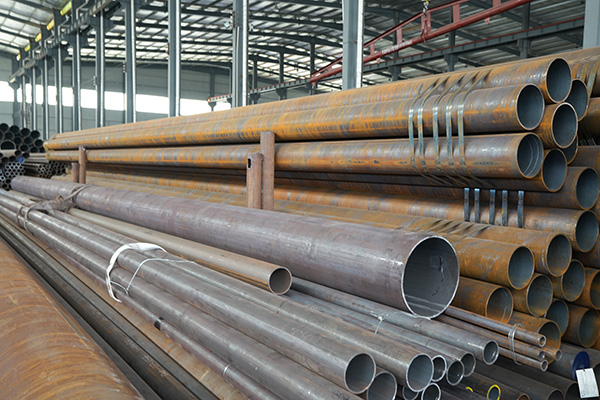
Applications in Cryogenic Pipeline Systems
Industries across the globe rely on ASTM A333-6 seamless pipes for transporting liquefied gases and cryogenic fluids. Oil and gas processing facilities, petrochemical plants, and natural gas liquefaction terminals represent primary markets for this specialized product. The pipe's ability to withstand thermal cycling and maintain structural integrity at sub-zero temperatures makes it indispensable for modern energy infrastructure projects.
Factory production lines for ASTM A333 Gr.6 pipes incorporate heat treatment processes such as normalizing or quenching and tempering to achieve the required mechanical properties. Tensile strength minimums of 60,000 psi and yield strength of 35,000 psi ensure adequate safety margins for pressure-containing applications. Manufacturers with extensive experience in this grade can offer various wall thicknesses and diameters to meet specific project requirements.
Quality Control and Testing Standards
Reputable suppliers implement comprehensive quality management systems aligned with international standards. Non-destructive testing methods including ultrasonic examination, radiographic inspection, and hydrostatic testing verify the absence of defects that could compromise service performance. Each pipe undergoes visual inspection, dimensional verification, and surface finish evaluation before release to customers.
Hydrostatic testing pressures typically reach 60% of minimum yield strength for seamless pipes, ensuring structural integrity under operating conditions. For welded variations, additional examination of the weld seam ensures complete penetration and absence of inclusions or porosity. Factory laboratories equipped with spectrometers and mechanical testing equipment provide real-time quality verification throughout production cycles.
Selecting a Reliable Pipe Supplier
When sourcing ASTM A333 Gr.6 pipes, buyers should evaluate supplier capabilities including production capacity, quality certifications, and technical support services. Established manufacturers maintain ISO 9001 certification and hold relevant API and ASME certifications demonstrating competence in producing pressure-containing components. Supplier track records in delivering projects on schedule and providing after-sales support factor significantly in procurement decisions.
Price competitiveness matters, but quality and reliability remain paramount. Low-temperature applications carry inherent risks if inferior materials fail during service. Partnering with proven suppliers reduces project risks and ensures long-term operational safety. Many manufacturers offer value-added services including cutting to length, beveling, coating application, and custom packaging to streamline logistics for international shipments.
Future Trends in Low Temperature Pipe Technology
The growing demand for liquefied natural gas and hydrogen as clean energy carriers drives innovation in cryogenic pipe technology. Manufacturers invest in research and development to enhance material properties, reduce weight while maintaining strength, and improve corrosion resistance in aggressive environments. New steelmaking techniques enable finer grain structures and improved toughness at even lower temperatures.
As energy transition accelerates, suppliers and factories producing ASTM A333 Gr.6 pipes position themselves to meet evolving market demands. Collaboration between manufacturers and end-users drives continuous improvement in product design, testing methodologies, and application engineering support for the next generation of cryogenic infrastructure projects worldwide.
References
ASTM International. ASTM A333/A333M Standard Specification for Seamless and Welded Steel Pipe for Low-Temperature Service and Other Applications with Required Notch Toughness Testing.
American Society of Mechanical Engineers. ASME SA333/SA333M Specification for Seamless and Welded Steel Pipe for Low-Temperature Service.
American Petroleum Institute. API 5L Specification for Line Pipe, 46th Edition.