

In the demanding field of gas containment, a pressure cylinder is a component with no tolerance for material inconsistency. It is filled repeatedly, transported on public roads, exposed to impact and temperature variation, and expected to remain sound for a defined service life measured in years. For LPG and CNG cylinder manufacturing, 30CrMo4 and 34CrMo4 alloy seamless tube has become the reference material because it delivers high strength together with the toughness and weldability that pressure containment requires.
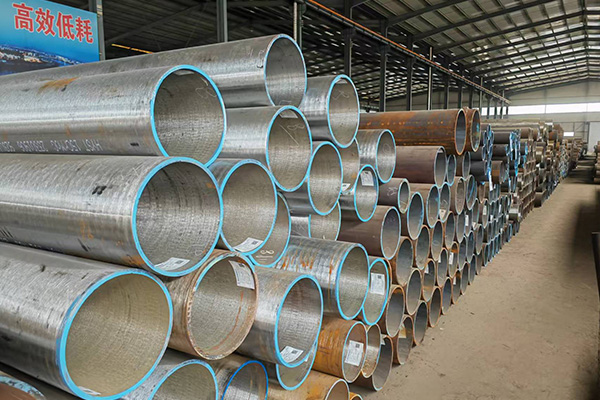
Global demand for compressed and liquefied gas containment continues to grow, driven by vehicle conversion programmes, industrial gas distribution and portable cooking fuel supply in developing markets. Every cylinder produced depends on the quality of the tube from which it is formed.
Understanding the Two Grades
Both grades are chromium-molybdenum alloy steels supplied to standards including GB 18248, EN 10297-1, ASTM A372 and JIS comparables. Their typical characteristics are:
30CrMo4 - chromium-molybdenum alloy with moderate carbon, offering tensile strength typically above 900 MPa after quenching and tempering, with good toughness and formability
34CrMo4 - slightly higher carbon and chromium, delivering higher strength after heat treatment, commonly used where cylinder design requires maximum strength-to-weight ratio
Molybdenum contributes hardenability and high temperature strength; chromium contributes hardenability and tempering resistance. Both grades respond predictably to quenching and tempering, which is why they dominate cylinder production.
Why Seamless Construction Is Essential
Cylinders are formed by hot spinning or closing the tube ends, then heat treated and tested. The absence of a weld seam matters at every stage:
No longitudinal seam to act as a stress concentrator under pressure cycling
Uniform response to hot spinning and end closing operations
Consistent wall thickness distribution after forming
Predictable behaviour during hydrostatic and burst testing
Simplified non-destructive examination, since there is no seam to inspect along the length
Heat Treatment: Quenching and Tempering
Cylinder tube is supplied and processed in the quenched and tempered condition. The treatment route determines the final balance of strength and toughness:
Austenitising within the specified temperature range to dissolve alloy carbides
Quenching to form martensite throughout the wall thickness
Tempering at the specified temperature to restore toughness and relieve stress
Furnace calibration and continuous temperature recording are essential, because excessive tempering reduces strength below the design requirement while insufficient tempering leaves the material brittle. Hardness testing provides a fast verification that the treatment was correctly applied.
Mechanical and Testing Requirements
Cylinder tube specifications are demanding, and buyers should confirm the full test regime is implemented:
Tensile testing for yield strength, tensile strength and elongation
Impact testing at the specified temperature to verify toughness
Hardness testing across the wall thickness
Flattening and flaring tests to verify ductility and soundness
Dimensional inspection of outside diameter, wall thickness and concentricity
Hydrostatic or non-destructive testing on every length
Batch traceability with heat number and full documentation
Cylinder manufacturers typically perform additional verification after forming, including hydrostatic proof testing, burst testing on samples and cycle testing to the applicable design code.
Certification and Regulatory Compliance
Cylinders are regulated products. Depending on the destination market, production may need to satisfy ISO 9809, EN 1964, DOT specifications, GB 5099 or equivalent national standards, with certification by a notified body or authorised inspector. Tube supplied for cylinder production should therefore carry:
EN 10204 3.1 or 3.2 certification with full chemistry and mechanical results
Heat treatment records for each batch
Heat traceability from billet to finished tube
Support for third-party inspection and witness testing
Typical Applications
LPG cylinders for domestic, commercial and industrial use
CNG cylinders for vehicles, including cascades and storage banks
Industrial gas cylinders for oxygen, nitrogen, argon and hydrogen
High pressure accumulator and receiver shells
Fire suppression and breathing apparatus cylinders
Conclusion
Gas containment is a field where material consistency and documentation matter as much as mechanical properties. 30CrMo4 and 34CrMo4 alloy seamless tube delivers the strength, toughness and heat treatment response that LPG and CNG cylinder manufacturing requires, in a form that supports high volume production and regulatory certification. Sourcing from an experienced China cylinder tube manufacturer with controlled chemistry, documented heat treatment and complete mechanical testing supports both production efficiency and compliance.
Eric Sullivan
Pressure Vessel Consultant, Baoyang Pipeline
Eric Sullivan is a pressure vessel consultant at Cangzhou Baoyang Pipeline Equipment Co., Ltd. with twenty years of experience in gas containment and high pressure equipment. He advises cylinder manufacturers, equipment fabricators and certification bodies on alloy tube specification, mechanical testing, heat treatment and regulatory documentation for LPG and CNG cylinder production.