

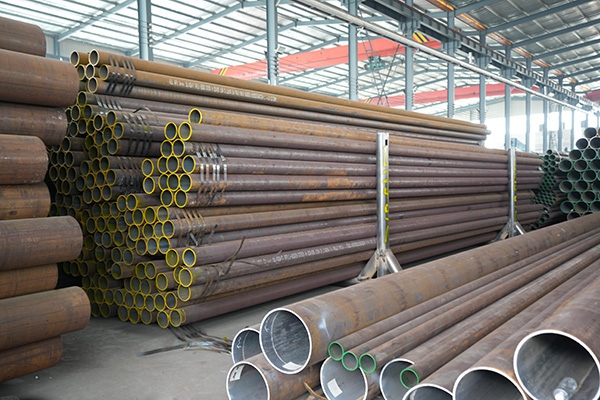
In the demanding environment of a refinery cracking furnace, tube life is measured against conditions that destroy ordinary steel within months. The tube carries hydrocarbon feed at high temperature and moderate pressure while its outer surface faces radiant heat from burners, and its inner surface faces coking, carburisation and, in some services, sulphur attack. GB/T 9948 petroleum cracking seamless steel tube was written for exactly this duty, and its chromium-molybdenum grades remain the standard answer for furnace and cracking unit piping.
Global refining capacity continues to operate at high utilisation, and operators push conversion units harder for margin. Longer run lengths between decoking cycles place additional demands on tube material, making correct grade selection more consequential than ever.
What GB/T 9948 Covers
GB/T 9948 is the Chinese standard for seamless steel tubes for petroleum cracking. It addresses tubes used in furnace convection and radiant sections, transfer lines and associated high temperature process piping. Common grades include:
12Cr5Mo - approximately 5% chromium with molybdenum, comparable in application to ASTM A335 P5 and DIN 17175 12CrMo195. Suited to moderate temperature sections with meaningful sulphur exposure
12Cr9Mo - approximately 9% chromium with molybdenum, comparable to ASTM A335 P9. Higher oxidation and creep resistance for radiant section and high temperature transfer service
12Cr2Mo and 12Cr1Mo - lower alloy options for convection section and lower temperature duty
Chromium content is the primary driver: it provides resistance to high temperature oxidation, sulphidation and carburisation, while molybdenum contributes creep strength. Higher chromium grades cost more but deliver markedly longer life in the hottest zones.
Degradation Mechanisms in Cracking Service
Understanding how cracking tube fails is the basis of correct specification. The dominant mechanisms are:
Coking - carbon deposition on the internal surface, restricting flow, raising tube metal temperature and accelerating creep
Carburisation - carbon diffusion into the metal, causing embrittlement and volume change
Creep rupture - progressive deformation under stress at temperature, eventually producing the characteristic bulged and thinned tube
High temperature oxidation and sulphidation - external and internal metal loss, aggravated by sulphur in the feed
Thermal fatigue - cracking driven by repeated start-up, shutdown and decoking cycles
Material selection addresses these in combination: adequate chromium for oxidation and carburisation resistance, adequate molybdenum for creep strength, and sufficient wall thickness to provide a corrosion and erosion allowance.
Temperature Capability and Wall Thickness
Grade selection should follow calculated tube metal temperature, which in radiant sections can substantially exceed the process fluid temperature. As a general guide, lower alloy grades serve convection section duty, 12Cr5Mo handles intermediate temperature zones, and 12Cr9Mo is applied in the hottest radiant and transfer line positions.
Wall thickness must account simultaneously for internal design pressure, the applicable corrosion allowance, and the expected metal loss between inspections. Underestimating any of the three shortens run length and increases the probability of an in-service rupture.
Typical Applications
Cracking furnace radiant and convection section tubes
Transfer line piping between furnace and downstream equipment
Refinery heater and reformer outlet piping
High temperature process lines in ethylene and aromatics units
Coker heater and visbreaker furnace tube assemblies
High temperature sulphur-containing hydrocarbon service generally
Inspection and Life Management
Effective life management of cracking tube relies on periodic condition assessment rather than fixed replacement intervals:
External visual inspection during shutdowns for bulging, sagging and scale condition
Ultrasonic wall thickness measurement at defined grid locations
Dimensional checks for creep strain, particularly diameter growth
Metallographic replication where advanced creep damage assessment is warranted
Condition-based retirement criteria rather than calendar-based replacement
Manufacturing and Quality Control
A qualified cracking tube supplier implements full metallurgical control:
Billet inspection with complete spectrographic chemistry verification
Controlled hot piercing, rolling and sizing to achieve dimensional requirements
Normalising and tempering in calibrated furnaces with chart records
Dimensional inspection of outside diameter, wall thickness, ovality and straightness
Hydrostatic or non-destructive electric testing on every tube
Mechanical testing - tensile, hardness, flattening and flaring
Microstructural examination and grain size verification where specified
Heat traceability, marking and EN 10204 3.1 or 3.2 certification
Hardness verification at receipt, combined with positive material identification, protects against the grade mix-up that remains one of the most common causes of premature cracking tube failure.
Conclusion
Cracking furnace reliability depends on matching chromium and molybdenum content to the real thermal and chemical duty. GB/T 9948 seamless tube in 12Cr5Mo and 12Cr9Mo provides the oxidation resistance, carburisation resistance and creep strength that refinery furnace and transfer line service demands. Sourcing from an experienced China heat resistant alloy tube manufacturer with documented heat treatment, complete testing and third-party inspection support gives refiners a dependable route to longer run lengths and fewer unplanned shutdowns.
Brian Foster
Refinery Materials Specialist, Baoyang Pipeline
Brian Foster is a refinery materials specialist at Cangzhou Baoyang Pipeline Equipment Co., Ltd. with eighteen years of experience in refining and petrochemical service. He advises engineering contractors and refinery operators on heat resistant alloy tube selection, creep and oxidation assessment, and inspection planning for furnace and cracking unit piping supplied to GB, ASTM and DIN standards.