

In the demanding environment of industrial boiler systems, the tube is both the pressure boundary and the heat transfer surface - two functions that place it under simultaneous mechanical and thermal stress. Selecting a ASTM A192 / ASME SA192 high pressure boiler tube is therefore a decision about safety as much as efficiency: tube failure inside a boiler does not produce a minor leak, it produces an emergency shutdown and a potentially dangerous release of energy. For procurement managers in power, chemical and process industries, this is one specification where the cheapest option is rarely the least expensive.
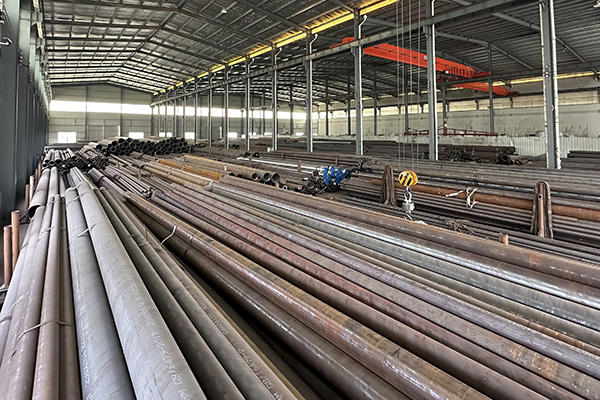
Global demand for reliable steam continues to grow alongside industrial capacity expansion, while boiler designs trend toward higher pressure, higher temperature and more frequent cycling to accommodate variable loads. Each of those trends raises the performance requirement placed on every tube in the bundle.
What ASTM A192 / ASME SA192 Specifies
ASTM A192 / ASME SA192 covers seamless carbon steel boiler tubes for high pressure service. It is one of the most widely specified boiler tube standards worldwide, and its key requirements include:
Tensile strength - minimum 325 MPa
Yield strength - minimum 180 MPa
Elongation - minimum 35%, reflecting the ductility needed for bending, expanding and welding into tube sheets
Carbon content - typically 0.06% to 0.18%, balancing strength against weldability
Manufacturing route - seamless, hot finished or cold finished
Mandatory tests - hydrostatic or non-destructive electric testing on each tube, plus flattening, flaring, flange and hardness testing
Tubes are normally supplied in the normalised or as-rolled condition in sizes commonly ranging from about 12.7 mm to 177.8 mm outside diameter, with wall thickness matched to ASME boiler code calculations.
Why Seamless Construction Matters for Boiler Tube
A weld seam in a boiler tube is a location where wall thickness, microstructure and residual stress all differ from the base material. Under the combination of internal pressure, thermal cycling, external corrosion and erosion from flue gas, that discontinuity becomes a preferential failure site. Seamless construction eliminates it entirely, delivering:
Uniform strength around the full circumference
Consistent response to bending and expanding operations during fabrication
Predictable behaviour during hydrostatic and non-destructive testing
Better performance in high pressure service where design margins are tighter
Typical Applications
Waterwall, economiser, evaporator and superheater tubes in industrial and utility boilers
High pressure steam drums and associated riser and downcomer circuits
Heat recovery steam generators (HRSG) in combined cycle plants
Process boilers in chemical, fertilizer, textile, paper and food processing plants
Waste heat recovery boilers in cement, steel and metallurgical facilities
Heat exchangers and condensers where carbon steel is appropriate for the service
Common Failure Modes and How Specification Prevents Them
Understanding why boiler tubes fail is the fastest route to specifying them correctly. The dominant mechanisms are:
Overheating and creep rupture - caused by internal scaling, poor circulation or flame impingement; controlled by correct material selection and water chemistry
Fireside corrosion and erosion - managed through fuel specification, soot blowing practice and, where needed, protective shielding
Thermal fatigue cracking - driven by frequent start-stop cycles; mitigated by design flexibility and controlled ramp rates
Weld and attachment defects - addressed through qualified welding procedures and post-weld heat treatment
Material mix-up - prevented by positive material identification (PMI) and full batch traceability
Manufacturing and Quality Control
A dependable high pressure boiler tube manufacturer applies a defined control sequence:
Billet inspection with spectrographic chemistry verification
Hot piercing and rolling, followed by cold drawing or cold rolling for final size and surface finish
Heat treatment as specified, with recorded furnace parameters
Dimensional inspection of outside diameter, wall thickness, length and straightness
Hydrostatic testing or non-destructive electric testing on every tube
Destructive sampling - flattening, flaring, flange and hardness tests per lot
Surface treatment, end protection and export packaging in bundles or wooden cases
Marking and documentation to EN 10204 3.1 or 3.2 with heat number traceability
Third-party inspection by SGS, TUV or BV is routine for export boiler projects, and code stamp requirements under ASME Section I should be confirmed with the manufacturer at enquiry stage.
Selection Guidance
When specifying boiler tube, define metal temperature as well as fluid temperature, since the tube wall runs hotter than the steam or water inside it. Where metal temperature exceeds roughly 425-450 C, alloy grades such as ASTM A213 T11, T22, T91 or T92 replace carbon steel. Other items to confirm include OD and minimum wall thickness, length, straightness tolerance, supplementary testing, surface condition and whether the tubes will be bent, expanded or welded during fabrication.
Conclusion
Boiler reliability begins with tube quality. ASTM A192 / ASME SA192 high pressure boiler tube offers the strength, ductility and dimensional consistency needed for safe long-term operation in industrial and utility boilers. Sourcing from an established boiler steel tube supplier that maintains stock in common sizes, delivers full certified documentation and supports third-party inspection helps operators protect both availability and safety across the full life of the boiler.
James Anderson
Boiler Pressure Part Engineer, Baoyang Pipeline
James Anderson is a pressure part engineer at Cangzhou Baoyang Pipeline Equipment Co., Ltd. with more than twelve years of experience in industrial boiler and HRSG projects. He supports boiler OEMs and plant operators with tube grade selection, code compliance, failure analysis and inspection planning for high pressure boiler tube supply.