

In the demanding world of low temperature piping, material failure rarely announces itself in advance. Ordinary carbon steel that performs perfectly at ambient temperature can lose nearly all of its impact toughness once the mercury drops, turning a routine pressure event into a brittle fracture. For engineers working on LNG terminals, cryogenic storage, air separation units and refrigerated chemical processing, selecting an ASTM A333 Grade 6 low temperature seamless steel pipe is one of the few decisions that directly determines whether a system survives its design life or fails catastrophically in its first winter.
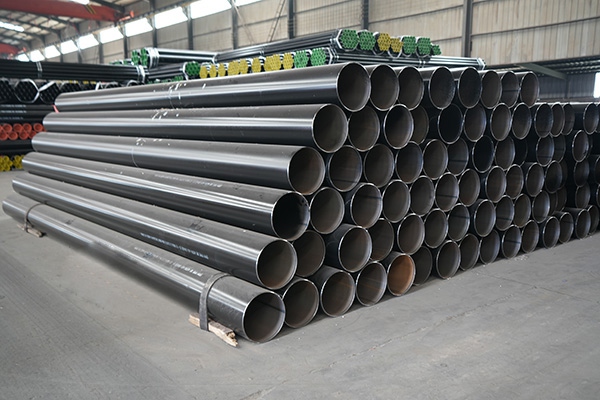
The global shift toward natural gas as a transition fuel has pushed cryogenic infrastructure into regions and operating envelopes that were uncommon a decade ago. Regasification terminals, satellite LNG plants and long-distance low temperature transfer lines all require pipe that remains ductile under thermal contraction. This is precisely the service envelope that ASTM A333 Grade 6 was written to address.
Why Low Temperature Service Demands a Dedicated Pipe Grade
Ferritic steels undergo a ductile-to-brittle transition as temperature falls. Above the transition temperature a pipe deforms plastically under overload; below it, cracks propagate with almost no energy absorption. The practical consequence is that a line rated for a given pressure at 20 C can rupture at a fraction of that pressure at -40 C with no visible warning.
A dedicated low temperature seamless steel pipe grade addresses this through three mechanisms: controlled carbon and manganese chemistry, grain refinement via normalizing heat treatment, and mandatory Charpy V-notch impact verification. ASTM A333 Grade 6 combines all three, which is why it remains the default specification for process piping operating between -45 C and ambient conditions.
What the ASTM A333 Grade 6 Specification Actually Requires
ASTM A333 / ASME SA333 covers seamless and welded carbon and alloy steel pipe intended for low temperature service. Grade 6 is the most widely specified grade within the standard, and its requirements are unusually explicit:
Chemistry control - restricted carbon, manganese, phosphorus and sulphur limits that preserve weldability and toughness.
Impact testing - Charpy V-notch testing is mandatory, with minimum absorbed energy values defined for the specified test temperature, commonly -45 C.
Heat treatment - normalizing, or quenching and tempering where agreed, to refine grain structure and stabilise mechanical properties.
Mechanical properties - minimum tensile strength of 415 MPa and minimum yield strength of 240 MPa for Grade 6.
Non-destructive examination - hydrostatic testing of every length, plus supplementary ultrasonic or eddy current inspection where specified.
Equivalent designations used in international projects include GB/T 18984 16MnDG, GB/T 18984 16MnDR plate equivalents and EN 10216-2 low temperature grades. A competent ASTM A333 Gr.6 supplier should be able to supply against ASTM, ASME, GB and EN specifications from the same production route, with full traceability back to the heat number.
Key Performance Advantages on Site
Reliable toughness at sub-zero temperatures - verified impact energy removes guesswork from brittle fracture risk.
Clean steel and sound weld seams - the seamless manufacturing route eliminates the longitudinal weld, removing the most common initiation point for low temperature cracking.
Stable dimensional behaviour - consistent wall thickness and ovality support automatic orbital welding and reduce fit-up delays during construction.
Compatibility with standard coatings - 3PE, FBE and bituminous systems bond reliably to normalized Grade 6 surfaces.
Life cycle economy - a slightly higher initial material cost is recovered through avoided unplanned shutdowns and lower inspection frequency.
Typical Applications
ASTM A333 Grade 6 pipe is specified across a wide band of industries where low temperature service is normal rather than exceptional:
LNG receiving terminals, loading arms and cryogenic transfer lines
Air separation and industrial gas plants handling liquid oxygen, nitrogen and argon
Refrigerated chemical and petrochemical process piping
Refrigeration systems in food processing and cold chain facilities
Offshore and arctic oil and gas production where ambient temperatures fall below -30 C
Low temperature heat exchangers, condensers and vaporisers
Manufacturing and Quality Control
A qualified cryogenic steel pipe manufacturer controls quality at each production stage rather than relying on final inspection alone. The critical control points are:
Raw material verification with mill certificates and spectrographic analysis
Controlled piercing, rolling or cold drawing to achieve the specified dimensional tolerance
Normalizing heat treatment in a calibrated furnace, with continuous temperature recording
Charpy V-notch impact testing at the contractually specified temperature
Hydrostatic testing of every pipe length
Non-destructive testing - ultrasonic, eddy current or magnetic particle as specified
Final dimensional inspection, bevelling, marking and batch traceability
Buyers should expect a full documentation package: EN 10204 3.1 or 3.2 mill certificate, heat treatment records, impact test reports and NDT results. Third-party inspection by SGS, TUV or Bureau Veritas is standard practice for export projects and should be welcomed rather than resisted by the manufacturer.
Standards, Compliance and Global Trends
Tighter safety regulation and stricter environmental rules continue to raise the performance floor for low temperature piping. ISO 3183 and API 5L govern transmission pipelines, while ASME B31.3 and B31.8 define the design and construction rules for process and gas transmission systems. Selecting pipe that carries documented compliance with these frameworks is no longer a technical preference but a prerequisite for project approval and insurance.
How to Select the Right Grade and Size
When specifying low temperature pipe, the decision should be driven by the lowest anticipated metal temperature, not by the ambient average. Practical selection steps include:
Define the design minimum temperature, including depressurisation and Joule-Thomson cooling effects
Confirm the impact test temperature and required absorbed energy with the end client
Verify wall thickness against internal pressure plus corrosion allowance and external loads
Specify supplementary requirements such as NACE MR0175 where sour service is possible
Confirm coating, end finish (plain, bevelled) and length requirements early to avoid schedule risk
Conclusion
The reliability of a cryogenic or low temperature pipeline rests on a single material decision. ASTM A333 Grade 6 low temperature seamless steel pipe delivers verified toughness, weld integrity and dimensional consistency in exactly the temperature range where conventional carbon steel becomes unsafe. Working with an experienced seamless pipe manufacturer in China that supplies to ASTM, ASME, GB and EN standards, supports third-party inspection and maintains stock for bulk supply, gives engineering procurement teams a dependable route from specification to delivered pipe - whether the destination is an LNG terminal in Asia, a chemical complex in Europe or a gas processing facility in the Middle East.
Michael Johnson
Pipeline Materials Engineer, Baoyang Pipeline
Michael Johnson is a materials engineer at Cangzhou Baoyang Pipeline Equipment Co., Ltd. with more than fifteen years of experience in low temperature and cryogenic steel applications. He advises EPC contractors and LNG operators on grade selection, impact testing requirements and specification compliance for seamless pipe supplied to ASTM, ASME, GB and EN standards.