

In the demanding world of buried pipeline engineering, corrosion is not a question of if but of when. Steel in soil is electrochemically unstable, and without intervention a bare pipeline loses wall thickness at a rate that can perforate it within a decade. Coating is the primary barrier, and selecting the right external pipe coating system is among the highest-leverage decisions in pipeline design because it is the only corrosion control measure applied before the pipe disappears underground.
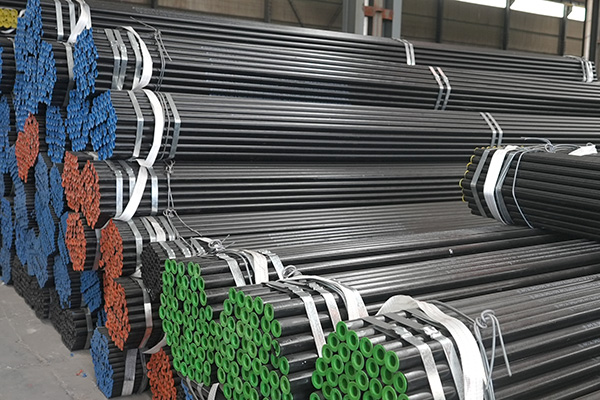
Global pipeline operators continue to extend networks into more aggressive environments - saline soils, high water table terrain, and areas with significant ground movement. Each of these raises the performance requirement placed on the coating.
Why Coating Matters More Than Any Other Protection Layer
Cathodic protection is essential, but it is expensive to operate at high current and cannot protect a large bare surface economically. Coating reduces the current demand by orders of magnitude, which is why the two systems are always used together:
Coating provides the primary barrier, isolating steel from electrolyte
Cathodic protection protects the small areas where coating has been damaged or has degraded
A high quality coating therefore does more than prevent corrosion - it reduces the lifetime cost of cathodic protection and extends the interval between integrity interventions.
Main Coating Systems Compared
Three-Layer Polyethylene (3PE)
3PE combines a fusion bonded epoxy primer, an adhesive copolymer layer and a polyethylene topcoat. It is widely regarded as the benchmark for buried service:
Excellent resistance to mechanical damage during handling, backfilling and soil settlement
Very low water absorption and strong chemical stability
Good performance across a wide temperature range
Higher system cost, justified on long-distance and high-consequence lines
Fusion Bonded Epoxy (FBE)
FBE is a single-layer thermoset powder coating applied electrostatically to heated steel:
Outstanding adhesion to the steel substrate
Good elevated temperature performance
Simpler application and lower cost than multi-layer systems
Somewhat more susceptible to mechanical damage, requiring careful handling and backfill
Dual-layer FBE variants add an abrasion-resistant outer layer where mechanical damage risk is higher.
Coal Tar Enamel and Bituminous Coatings
Traditional systems still used in certain markets and rehabilitation work:
Low material cost and a long service history
Good water resistance
Limited elevated temperature performance and increasing environmental restriction on use
Polypropylene and Specialised Systems
Three-layer polypropylene serves higher temperature service where polyethylene would soften. Concrete weight coating is applied over the corrosion coating for offshore lines requiring negative buoyancy and mechanical protection.
Surface Preparation: The Decisive Factor
Coating failure is far more often a preparation failure than a material failure. A coating system is only as good as the surface it bonds to:
Blast cleaning to Sa 2.5 is the standard requirement, removing mill scale, rust and contaminants
Surface anchor profile - typically 50 to 100 micrometres - measured and verified
Removal of salts and dust, with compressed air quality controlled
Application within the specified time window before flash rusting occurs
Controlled pipe heating temperature, verified immediately before powder application
Application and Inspection Requirements
Coated pipe should be verified before it leaves the plant and again before it enters the trench:
Coating thickness measurement at defined intervals around the circumference and along the length
Holiday detection at the specified test voltage over the full surface
Adhesion testing by peel or pull-off method per specification
Cathodic disbondment testing where the project specification requires it
Impact and indentation resistance checks for multi-layer systems
Cut-back length at pipe ends prepared correctly for field welding
Field joint coating using heat shrink sleeves, liquid epoxy or compatible systems
Coordination with Cathodic Protection and Handling
Coating does not work in isolation. Practical measures that protect the investment include:
Backfill free of stones and sharp debris, or imported sand padding around the pipe
Padded handling equipment and non-metallic slings during lowering in
Cathodic protection energised promptly after construction
Regular close-interval potential surveys and direct assessment to track coating condition
Conclusion
Coating selection sets the corrosion baseline for the entire life of a buried pipeline. 3PE and FBE systems dominate modern practice for good reason, with coal tar and bituminous systems retained where conditions and regulation permit. Working with an experienced China coated pipe supplier that controls surface preparation, applies coating to a documented procedure and performs full holiday and thickness inspection gives operators the best available assurance against the degradation that begins the moment a line is backfilled.
Gregory Shaw
Corrosion Protection Specialist, Baoyang Pipeline
Gregory Shaw is a corrosion protection specialist at Cangzhou Baoyang Pipeline Equipment Co., Ltd. with nineteen years of experience in pipeline coating and cathodic protection. He advises pipeline operators, EPC contractors and coating applicators on coating system selection, surface preparation, holiday detection and inspection for onshore and buried pipeline projects.