

The Growing Demand for High-Performance Transmission Line Pipe
As global energy networks continue to expand, Transmission Line Pipe must meet increasingly demanding technical and operational requirements. Pipelines are expected to transport large volumes of oil and gas over long distances while maintaining safety, efficiency, and durability.
Within the API 5L specification, X70 has emerged as a preferred grade for many transmission projects. Supported by stable manufacturer-controlled production and proven bulk supply capabilities, API 5L X70 is widely recognized for its ability to balance strength, reliability, and cost efficiency.
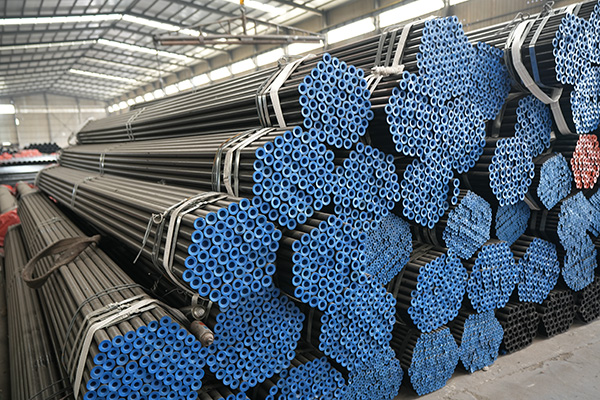
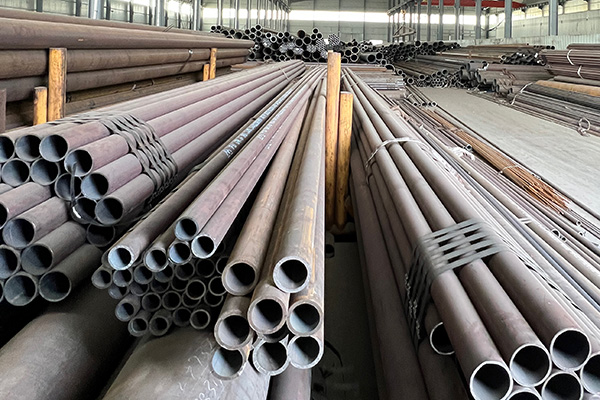
Understanding API 5L X70 in Pipeline Engineering
API 5L defines a series of steel grades designed specifically for line pipe applications. X70 represents a higher-strength option that allows pipeline designers to achieve improved performance without compromising safety.
For Transmission Line Pipe, this grade offers higher yield strength compared to lower grades, enabling pipelines to handle greater internal pressures. This characteristic is particularly valuable in long-distance transmission systems, where pressure losses and operating stresses must be carefully managed.
Mechanical Strength and Structural Reliability
One of the primary reasons API 5L X70 is favored lies in its mechanical performance. Higher yield and tensile strength allow pipelines to withstand demanding operating conditions, including fluctuating pressure and external environmental loads.
From an engineering standpoint, stronger material performance reduces the likelihood of deformation and fatigue over time. For Transmission Line Pipe, this translates into improved structural reliability and a longer service life, even in challenging terrain or climate conditions.
Optimized Wall Thickness and Material Efficiency
API 5L X70 enables engineers to optimize wall thickness without sacrificing safety margins. Thinner walls reduce overall material usage while maintaining pressure resistance, which can significantly impact project economics.
In large-scale Transmission Line Pipe installations, reduced material consumption leads to lower transportation costs, easier handling during installation, and improved construction efficiency. These practical advantages contribute to the widespread adoption of X70 in modern pipeline design.
Consistency Through Controlled Production
Production consistency is critical for any transmission pipeline project. API 5L X70 is typically produced under tightly controlled manufacturing conditions that ensure uniform mechanical properties and dimensional accuracy.
Stable production processes support reliable quality across long pipe runs, minimizing variability that could introduce weak points into the system. For projects requiring large volumes of Transmission Line Pipe, consistency is essential for smooth installation and long-term operational stability.
Suitability for Long-Distance Transmission
Transmission pipelines often span hundreds or even thousands of kilometers. API 5L X70 is particularly well suited to these applications due to its combination of strength and toughness.
This balance allows the pipe to accommodate ground movement, thermal expansion, and pressure cycling without compromising integrity. As a result, Transmission Line Pipe made from X70 steel is frequently selected for major oil and gas corridors where reliability is paramount.
Welding Performance and Field Installation
Despite its higher strength, API 5L X70 maintains favorable weldability when proper procedures are followed. This characteristic is crucial during field installation, where consistent welding quality directly affects pipeline safety.
Efficient welding reduces construction time and helps maintain schedule predictability for large transmission projects. For contractors working with Transmission Line Pipe, X70 provides a practical balance between advanced material performance and manageable installation requirements.
Long-Term Operational and Maintenance Benefits
Over the operational lifespan of a pipeline, maintenance considerations play a major role in total project cost. The mechanical stability of API 5L X70 helps reduce the likelihood of repairs caused by material fatigue or deformation.
By supporting stable long-term operation, Transmission Line Pipe made from X70 contributes to improved system reliability and reduced maintenance intervention. These factors are especially valuable for pipelines operating in remote or difficult-to-access regions.
Why API 5L X70 Continues to Be the Preferred Choice
So why is API 5L X70 preferred for transmission pipeline projects? The answer lies in its ability to deliver high strength, consistent quality, and practical efficiency across the entire project lifecycle.
Supported by large-scale production capacity and bulk supply from experienced manufacturers, API 5L X70 continues to meet the evolving demands of modern Transmission Line Pipe systems.
Conclusion
API 5L X70 has become a benchmark material for transmission pipelines due to its proven mechanical performance and production reliability. From optimized design to long-term operation, it provides clear advantages for large-scale oil and gas transmission projects.
For engineers and project planners seeking dependable Transmission Line Pipe, X70 remains a logical and widely accepted choice.
References
GB/T 7714:Bhadeshia H K D H, Honeycombe R W K. Steels: microstructure and properties[M]. Butterworth-Heinemann, 2017.
MLA:Bhadeshia, Harshad Kumar Dharamshi Hansraj, and Robert William Kerr Honeycombe. Steels: microstructure and properties. Butterworth-Heinemann, 2017.
APA:Bhadeshia, H. K. D. H., & Honeycombe, R. W. K. (2017). Steels: microstructure and properties. Butterworth-Heinemann.