

Why API 5L X65Q Seamless Line Pipe Is Widely Used
In modern energy infrastructure, Seamless Line Pipe plays a critical role in ensuring safe and efficient transportation of oil and gas over long distances. Among various grades defined under API standards, API 5L X65Q Seamless Line Pipe is recognized for its balanced mechanical performance and reliable structural integrity.
Designed to meet high operational demands, this grade is commonly supplied through controlled manufacturer-level production systems, ensuring consistency across large volumes and making it suitable for bulk pipeline projects that require uniform quality from start to finish.
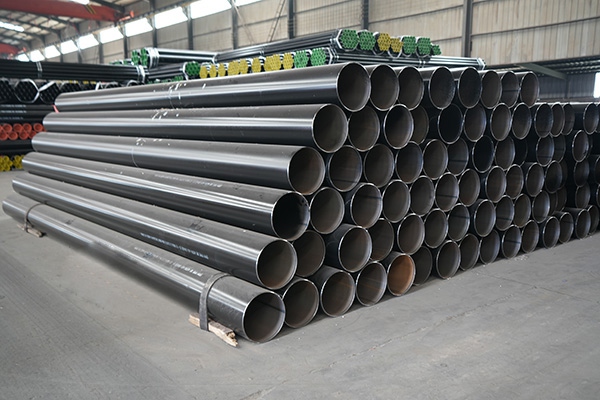
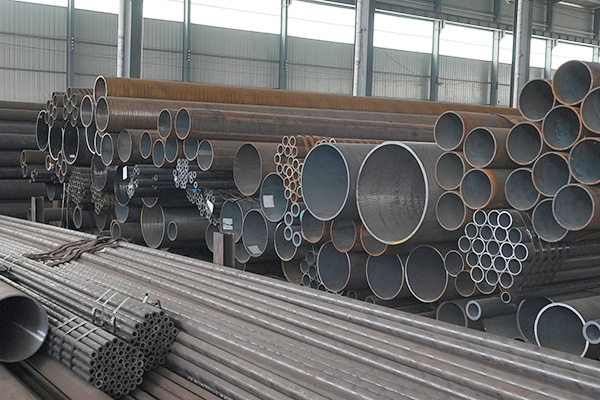
Understanding API 5L and the X65Q Grade
API 5L is an internationally recognized specification that defines the technical requirements for line pipes used in petroleum and natural gas transportation systems. Within this framework, X65Q represents a higher-strength grade with specific delivery conditions intended to enhance performance under demanding service environments.
Seamless Line Pipe produced to API 5L X65Q requirements must comply with strict criteria related to chemical composition, mechanical properties, dimensional tolerances, and inspection procedures. These requirements ensure the pipe can withstand internal pressure, external loads, and long-term operational stress.
Material Composition and Mechanical Characteristics
API 5L X65Q Seamless Line Pipe is engineered to achieve an optimal balance between strength, toughness, and ductility. The alloy design allows the pipe to resist deformation while maintaining sufficient flexibility to accommodate ground movement and temperature variation.
From an engineering perspective, these characteristics are essential for pipelines operating under fluctuating pressure conditions. Proper control of material composition during production ensures that each pipe section delivers predictable performance, reducing the risk of localized failure in extended pipeline systems.
Seamless Manufacturing Process Explained
The seamless manufacturing route is a key factor that distinguishes Seamless Line Pipe from other pipe types. Unlike welded products, seamless pipes are formed without longitudinal seams, resulting in uniform structure throughout the pipe wall.
The production process typically includes billet heating, piercing, rolling, sizing, and controlled heat treatment. Each step is carefully monitored to maintain dimensional accuracy and consistent microstructure. For large infrastructure projects, stable production capacity and batch consistency are critical to ensuring that all delivered pipes meet the same technical benchmarks.
Quality Control and Inspection Requirements
Quality assurance is an integral part of API 5L X65Q Seamless Line Pipe production. Pipes are subjected to dimensional inspection, mechanical testing, and non-destructive examination to verify compliance with the standard.
Traceability systems further strengthen quality control by linking each pipe to its production data, including heat numbers and inspection results. This level of documentation is especially important for long-distance transmission pipelines, where accountability and reliability are essential throughout the service life of the system.
Typical Applications of API 5L X65Q Seamless Line Pipe
API 5L X65Q Seamless Line Pipe is widely used in onshore and offshore oil and gas transmission projects. Its high strength allows for efficient pressure handling, while its seamless structure enhances resistance to fatigue and stress concentration.
In challenging environments such as high-pressure transmission lines or regions with complex geological conditions, this grade provides dependable performance. Engineers often select X65Q when project requirements demand both mechanical reliability and long-term operational stability.
Advantages Compared with Lower-Grade Line Pipe
Compared to lower-strength grades, API 5L X65Q Seamless Line Pipe offers improved load-bearing capacity and enhanced resistance to operational stress. This allows pipeline designers to optimize wall thickness while maintaining safety margins.
The result is a pipeline system that balances material efficiency with durability, helping reduce maintenance demands over the operational lifespan. These advantages contribute to the widespread adoption of this grade in large-scale transmission networks.
The Importance of Production Consistency
For Seamless Line Pipe, production consistency is not optional—it is essential. Variations in wall thickness, mechanical properties, or surface condition can introduce weak points within a pipeline system.
That is why pipeline projects prioritize suppliers with stable manufacturing processes capable of delivering uniform quality across bulk orders. Consistent production directly supports long-term reliability and simplifies installation and inspection activities in the field.
Conclusion: A Reliable Solution for Modern Pipeline Systems
So, what is API 5L X65Q Seamless Line Pipe? It is a high-performance pipeline material designed to meet the demanding requirements of modern oil and gas transmission.
Backed by standardized manufacturing, strict inspection procedures, and dependable manufacturer-supported bulk supply, API 5L X65Q Seamless Line Pipe continues to serve as a trusted solution for critical energy infrastructure projects worldwide.
References
GB/T 7714:McAllister E W. Pipeline rules of thumb handbook: a manual of quick, accurate solutions to everyday pipeline engineering problems[M]. Gulf Professional Publishing, 2013.
MLA:McAllister, E. W. Pipeline rules of thumb handbook: a manual of quick, accurate solutions to everyday pipeline engineering problems. Gulf Professional Publishing, 2013.
APA:McAllister, E. W. (2013). Pipeline rules of thumb handbook: a manual of quick, accurate solutions to everyday pipeline engineering problems. Gulf Professional Publishing.