

Why Refinery Piping Tube Is Central to Refinery Systems
In modern refining facilities, refinery piping tube is not merely a conduit—it is a structural and functional backbone of the entire refinery system. From crude intake to product transfer, every processing stage relies on stable and reliable piping performance.
Refinery piping tube must operate under high pressure, elevated temperature, and chemically aggressive environments. This is why standards such as API 5L, particularly X52 material, are widely specified to ensure consistent performance, safety, and long-term reliability.
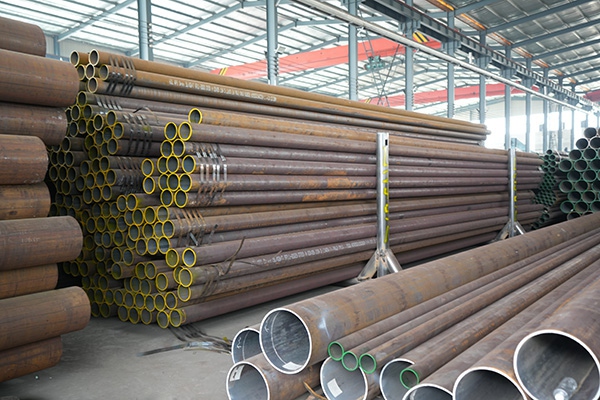
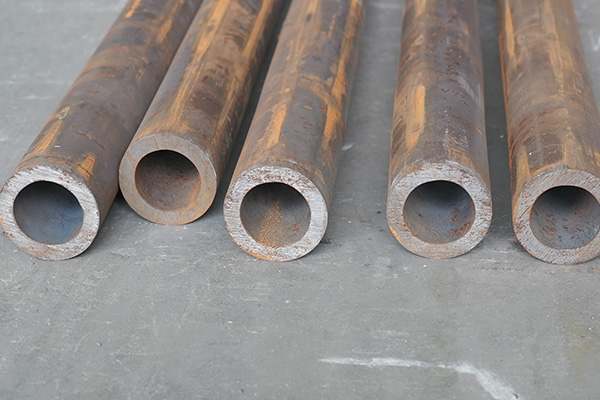
What Is Refinery Piping Tube in System Design?
What defines refinery piping tube in refinery systems?
It is the integration of material strength, dimensional accuracy, and operational stability within continuous refining processes.
Unlike general industrial piping, refinery piping tube is engineered specifically for uninterrupted operation. API 5L X52 refinery piping tube provides predictable mechanical behavior, allowing engineers to design refinery systems with precise safety margins.
API 5L X52: A Defining Standard for Refinery Piping Tube
Why is API 5L X52 so commonly used in refinery systems?
Because it offers a balanced combination of strength, toughness, and weldability.
API 5L X52 refinery piping tube meets strict requirements for chemical composition and mechanical performance. These requirements ensure uniformity across production batches, which is essential for large refinery networks where consistency directly affects system reliability.
Material Properties and Mechanical Performance
Refinery piping tube must withstand constant internal pressure and operational fluctuations. Key mechanical requirements include:
·Stable yield and tensile strength
·Resistance to deformation under pressure
·Reliable fatigue performance during thermal cycling
API 5L X52 material is designed to maintain these properties throughout long service periods, reducing the risk of unexpected failure.
Performance in High-Temperature and High-Pressure Conditions
Can refinery piping tube handle extreme operating conditions?
It must—refinery systems leave no margin for material weakness.
Refinery piping tube is commonly exposed to elevated temperatures and pressure variations. API 5L X52 provides sufficient strength and structural stability to perform reliably under these demanding conditions, making it suitable for critical refinery units.
Corrosion Considerations in Refinery Environments
Refinery systems often involve corrosive fluids, gases, and moisture. While corrosion protection strategies vary, base material integrity remains essential.
High-quality refinery piping tube provides a stable foundation for coatings and protection systems, helping extend service life and reduce maintenance requirements.
Manufacturing Control and Production Consistency
Is meeting material standards enough?
Only when supported by controlled production processes.
Refinery piping tube must be manufactured with precise control over wall thickness, diameter, and chemical composition. A capable manufacturer ensures that each pipe meets API 5L X52 requirements while maintaining consistency across large batches.
This level of control is essential for refinery projects that require reliable bulk supply over extended construction schedules.
Dimensional Accuracy and Installation Efficiency
Why does dimensional accuracy matter so much?
Because installation efficiency directly affects project timelines.
Accurate dimensions reduce fitting adjustments, minimize welding defects, and simplify alignment during installation. API 5L X52 refinery piping tube is widely chosen for its dimensional reliability, which supports efficient and predictable refinery construction.
Inspection and Quality Assurance
Before entering service, refinery piping tube undergoes comprehensive inspection procedures, including:
·Dimensional verification
·Mechanical testing
·Non-destructive examination
These quality assurance steps ensure compliance with API 5L standards and confirm the pipe’s suitability for refinery system integration.
Bulk Supply and Refinery Project Reliability
Large refinery projects demand steady material availability. Refinery piping tube must be supplied in sufficient volume with consistent quality across multiple production runs.
Proven bulk supply capability demonstrates not only production strength but also logistical reliability—both critical factors for refinery system success.
Lifecycle Value in Refinery Systems
Is refinery piping tube only about initial installation?
No—it defines long-term operational stability.
Durable material performance, reduced maintenance frequency, and predictable behavior under continuous operation contribute to lower lifecycle costs. Over time, these advantages significantly impact refinery efficiency and safety.
Conclusion: Refinery Piping Tube as a System-Defining Element
In refinery systems, material definition is inseparable from system performance.
With compliance to API 5L X52, controlled manufacturing processes, and reliable mass production capability, refinery piping tube defines the strength, safety, and durability of modern refining infrastructure.
From design and installation to long-term operation, refinery piping tube remains a fundamental element that refinery systems depend on.
References
GB/T 7714:Silman H. Corrosion and Corrosion Control: An introduction to corrosion science and engineering[J]. 1972.
MLA:Silman, H. "Corrosion and Corrosion Control: An introduction to corrosion science and engineering." (1972): 98-98.
APA:Silman, H. (1972). Corrosion and Corrosion Control: An introduction to corrosion science and engineering.