

Why Oil and Gas Alloy Pipe Matters in Pipeline Engineering
In pipeline engineering, material selection determines the safety, durability, and efficiency of an entire system. Among the available options, oil and gas alloy pipe has become a preferred choice for demanding energy transportation projects.
Designed to operate under high pressure, variable temperatures, and complex environmental conditions, oil and gas alloy pipe offers performance advantages that standard carbon steel pipes often struggle to match. Standards such as API 5L, especially grades like X46N, provide a clear framework for defining quality and reliability in modern pipeline engineering.
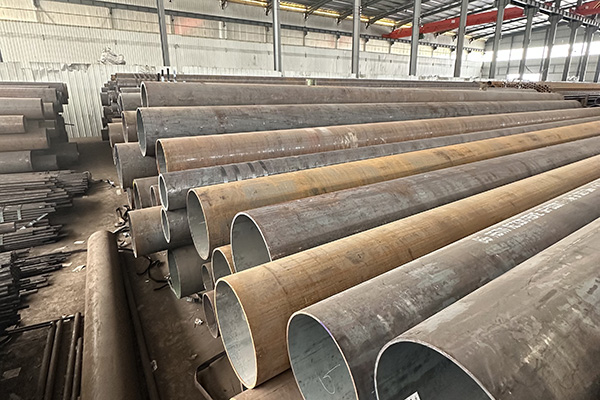
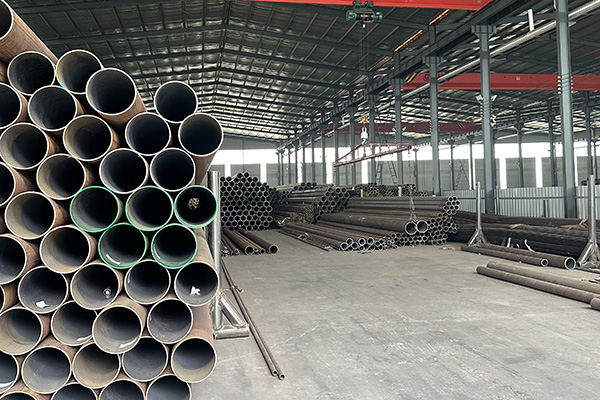
What Is Oil and Gas Alloy Pipe in Engineering Terms?
What defines oil and gas alloy pipe at its core?
It is the controlled combination of alloying elements and mechanical properties engineered specifically for oil and gas transmission systems.
Unlike ordinary pipeline materials, oil and gas alloy pipe is designed to maintain structural integrity across long distances while supporting continuous operation. API 5L X46N material grades ensure consistent strength and toughness, making them suitable for both onshore and offshore pipeline networks.
Material Composition and API 5L X46N Standards
Why does material composition matter so much?
Because pipeline failure often begins at the microscopic level.
Oil and gas alloy pipe incorporates alloy elements that improve strength, toughness, and resistance to environmental stress. Under API 5L X46N, chemical composition limits and mechanical performance requirements are strictly controlled to ensure uniformity across production batches.
This consistency allows pipeline engineers to design systems with predictable performance and safety margins.
Mechanical Performance Requirements in Pipeline Engineering
Pipeline engineering demands materials that can withstand constant internal pressure, external loads, and operational fluctuations.
Oil and gas alloy pipe manufactured to API 5L X46N standards demonstrates:
·Stable yield and tensile strength
·Resistance to deformation under pressure
·Improved fatigue resistance during pressure cycling
These mechanical characteristics help reduce long-term risk and improve pipeline reliability.
Environmental Adaptability of Oil and Gas Alloy Pipe
Can a pipeline material adapt to harsh conditions?
Oil and gas alloy pipe is specifically engineered to do so.
Whether exposed to temperature variation, moisture, or corrosive media, alloy-enhanced pipe materials offer improved resistance compared to basic carbon steel alternatives. This adaptability is especially valuable in long-distance pipelines crossing diverse terrains.
Manufacturing Control and Production Consistency
Is material quality alone sufficient?
Not without controlled production processes.
Oil and gas alloy pipe must be produced under precise manufacturing conditions to maintain dimensional accuracy, chemical uniformity, and mechanical consistency. A capable manufacturer ensures each pipe meets API 5L X46N requirements while supporting stable output for large-scale pipeline projects.
Reliable production capability is essential when bulk supply is required over extended construction timelines.
Weldability and Installation Efficiency
Does higher strength compromise weldability?
Not when properly engineered.
API 5L X46N oil and gas alloy pipe is designed to balance strength with weldability, allowing efficient field installation. Consistent material behavior reduces welding defects and improves overall construction efficiency, which is critical for large pipeline systems.
Quality Inspection and Engineering Assurance
Oil and gas alloy pipe used in pipeline engineering must pass strict inspection procedures before deployment. Typical quality checks include:
·Dimensional inspection
·Mechanical testing
·Non-destructive examination
These measures ensure compliance with API 5L standards and confirm that each production batch meets engineering expectations.
Why Pipeline Engineers Specify Oil and Gas Alloy Pipe
Why do engineers continue to specify oil and gas alloy pipe for critical projects?
Because reliability is non-negotiable.
The combination of standardized material grades, controlled manufacturing, and predictable performance makes oil and gas alloy pipe a dependable solution for modern pipeline engineering challenges.
Long-Term Value in Pipeline Systems
Is oil and gas alloy pipe only about upfront performance?
No—it is about lifecycle value.
Improved durability, reduced maintenance frequency, and stable long-term operation contribute to lower total ownership cost. Over the life of a pipeline, these benefits far outweigh initial material considerations.
Conclusion: Oil and Gas Alloy Pipe as an Engineering Standard
In pipeline engineering, material definition goes beyond specifications—it defines performance, safety, and reliability.
With compliance to API 5L X46N, controlled manufacturing processes, and proven suitability for mass supply, oil and gas alloy pipe stands as a cornerstone of modern energy infrastructure.
From design to long-term operation, oil and gas alloy pipe delivers the consistency and confidence pipeline engineering demands.
References
GB/T 7714:Silman H. Corrosion and Corrosion Control: An introduction to corrosion science and engineering[J]. 1972.
MLA:Silman, H. "Corrosion and Corrosion Control: An introduction to corrosion science and engineering." (1972): 98-98.
APA:Silman, H. (1972). Corrosion and Corrosion Control: An introduction to corrosion science and engineering.