

Why Low Temperature Alloy Steel Pipe Matters
In industries operating under harsh climatic conditions, low temperature alloy steel pipe is not optional—it is essential. When pipelines are exposed to subzero environments, conventional materials can lose toughness and become vulnerable to brittle failure. This is why API 5L X52N low temperature alloy steel pipe is widely specified for applications where safety and reliability cannot be compromised.
Defined by strict standards and engineered metallurgy, low temperature alloy steel pipe ensures stable performance even when temperatures drop well below normal operating ranges.
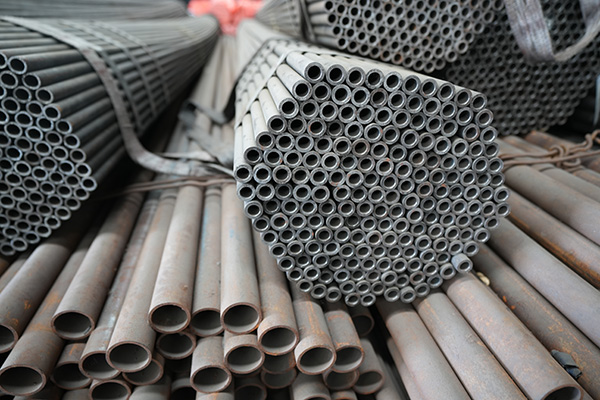
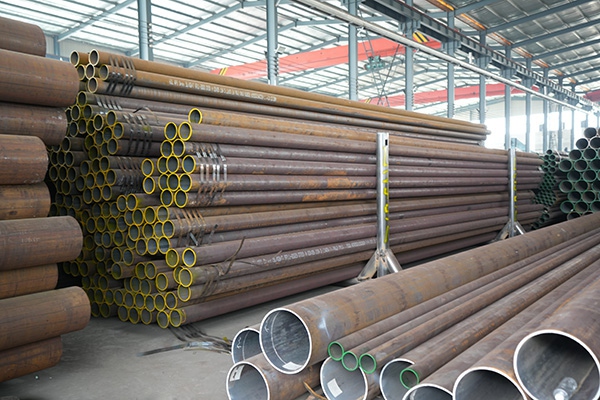
What Is Low Temperature Alloy Steel Pipe?
What defines low temperature alloy steel pipe?
At its core, it is a steel pipe specifically designed to retain strength, ductility, and impact resistance at low temperatures.
Unlike general line pipe, low temperature alloy steel pipe is produced with controlled chemical composition and mechanical properties to meet the demanding requirements of cold-region service. API 5L X52N is a representative material grade that balances strength and low-temperature toughness.
API 5L Standard and X52N Material Definition
Why is API 5L so important when defining low temperature alloy steel pipe?
Because it establishes unified requirements for chemical composition, mechanical performance, and testing.
API 5L X52N low temperature alloy steel pipe is designed to meet impact toughness and yield strength requirements that ensure safe operation under low-temperature stress conditions. The “N” designation reflects controlled rolling or normalizing processes, which improve grain structure and enhance toughness.
Mechanical Properties at Low Temperature
Low temperature environments amplify material weaknesses. A defining feature of low temperature alloy steel pipe is its ability to maintain:
·Stable yield and tensile strength
·High impact toughness
·Resistance to brittle fracture
API 5L X52N low temperature alloy steel pipe demonstrates reliable performance during temperature fluctuations, pressure cycles, and long-term operation.
Impact Toughness and Fracture Resistance
Can steel really perform safely at low temperatures?
Yes—if it is engineered correctly.
Low temperature alloy steel pipe is designed to absorb impact energy without cracking. This fracture resistance is critical in preventing sudden failures in cold environments where material embrittlement is a major risk.
Manufacturing Control and Quality Consistency
Material design alone is not enough. The definition of low temperature alloy steel pipe is inseparable from manufacturing control.
A qualified manufacturer ensures precise control over chemical composition, rolling processes, and heat treatment. Consistency across production batches guarantees that every pipe meets API 5L X52N requirements, which is essential for large-scale pipeline projects.
Production Precision and Dimensional Accuracy
Why does dimensional accuracy matter?
Because installation efficiency and long-term performance depend on it.
Low temperature alloy steel pipe must maintain tight tolerances for wall thickness and diameter. Precision production reduces welding stress, improves alignment, and supports structural integrity throughout the pipeline system.
Testing and Inspection Requirements
Before delivery, low temperature alloy steel pipe typically undergoes:
·Mechanical property testing
·Impact testing at low temperatures
·Dimensional inspection
·Non-destructive examination
These procedures verify compliance with API 5L X52N and confirm suitability for low-temperature service.
Bulk Supply Capability for Large Projects
Cold-region energy and infrastructure projects often require large quantities of pipe delivered on strict schedules. Reliable production capacity and stable bulk supply are defining factors when selecting low temperature alloy steel pipe.
Consistent quality across mass production batches demonstrates both technical strength and logistical reliability.
Long-Term Service Performance
Is low temperature alloy steel pipe only about initial installation?
Not at all.
Its true value lies in long-term performance—reduced maintenance, predictable behavior under stress, and extended service life. These factors significantly lower operational risk and lifecycle costs.
Conclusion: Defining Low Temperature Alloy Steel Pipe by Performance and Reliability
Low temperature environments demand materials that perform without compromise. Defined by API 5L standards, X52N material properties, controlled manufacturing, and reliable mass production, low temperature alloy steel pipe stands as a critical solution for cold and extreme conditions.
From engineering design to long-term operation, low temperature alloy steel pipe delivers the stability, safety, and durability required by modern industrial systems.
References
GB/T 7714:Anderson T L, Anderson T L. Fracture mechanics: fundamentals and applications[M]. CRC press, 2005.
MLA:Anderson, Ted L., and Ted L. Anderson. Fracture mechanics: fundamentals and applications. CRC press, 2005.
APA:Anderson, T. L., & Anderson, T. L. (2005). Fracture mechanics: fundamentals and applications. CRC press.