

The Role of API 5L in Fluid Transport Seamless Pipe Production
In industries where fluids such as oil, natural gas, water, and chemical media must be transported safely over long distances, fluid transport seamless pipe has become an essential infrastructure component. Compared with welded pipes, seamless pipes offer superior pressure resistance, uniform mechanical properties, and long-term reliability.
When manufactured under API 5L, fluid transport seamless pipe meets internationally recognized standards for strength, toughness, and dimensional accuracy. For a professional Fluid Transport Seamless Pipe Manufacturer, API 5L compliance reflects not only certification, but also standardized production systems and stable bulk production capability.
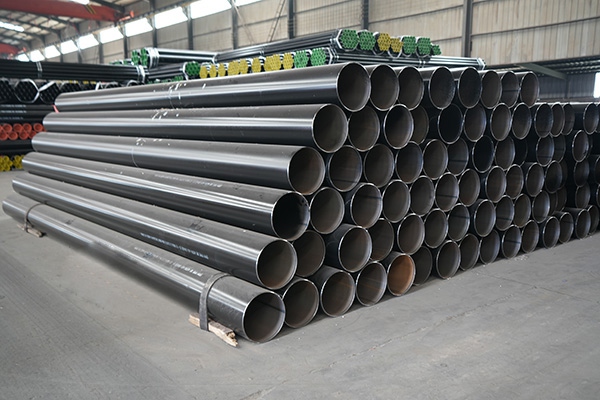
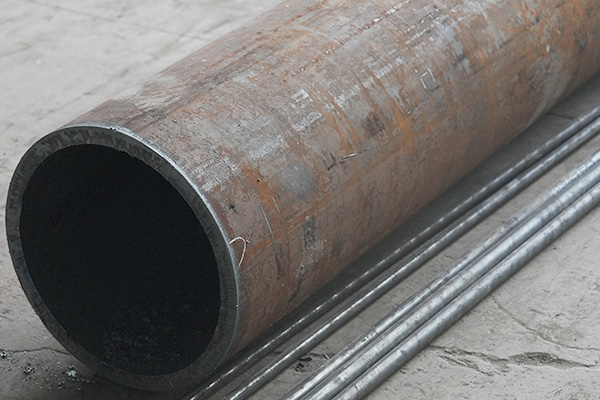
Understanding API 5L Requirements for Fluid Transport Pipes
API 5L is a specification issued by the American Petroleum Institute for line pipes used in fluid transmission systems. It defines requirements related to:
·Chemical composition of steel
·Mechanical properties under pressure
·Manufacturing process control
·Inspection, testing, and traceability
Fluid transport seamless pipes produced under API 5L are widely used in onshore and offshore pipelines, energy transmission networks, and industrial fluid systems.
Raw Material Selection and Billet Preparation
The manufacturing process begins with the selection of high-quality steel billets. For fluid transport seamless pipe, billets must meet strict chemical composition limits to ensure:
·Adequate strength and ductility
·Resistance to internal pressure
·Stable performance during forming
Reliable manufacturers source billets from approved steelmakers and conduct incoming inspections before production. This step lays the foundation for consistent product quality in large-scale production.
Heating and Piercing: Creating the Seamless Structure
Billet Heating
Billets are heated uniformly in a high-temperature furnace to achieve optimal plasticity. Controlled heating ensures smooth deformation during the next stage without compromising internal structure.
Piercing Process
The heated billet is pierced using a rotary piercing mill, transforming the solid billet into a hollow shell. This process defines the basic geometry of the seamless pipe and plays a critical role in wall thickness uniformity.
Advanced production lines monitor temperature, speed, and deformation parameters to ensure consistency during continuous production.
Hot Rolling and Dimensional Control
After piercing, the hollow shell undergoes hot rolling through a series of rolling mills. During this stage:
·The pipe is elongated to its required length
·Outer diameter and wall thickness are gradually reduced
·Grain structure is refined for better mechanical properties
Sizing and stretch-reducing mills help achieve tight dimensional tolerances required by API 5L, especially for fluid transport applications involving high pressure.
Heat Treatment for Mechanical Performance
Heat treatment is an essential step in the manufacturing of fluid transport seamless pipe. Depending on grade and application, manufacturers may apply:
·Normalizing
·Quenching and tempering
·Stress relieving
These treatments enhance strength, toughness, and resistance to brittle fracture. Consistent heat treatment processes are also critical for maintaining uniform quality across bulk production batches.
Straightening, Cutting, and Surface Processing
Following heat treatment, pipes are straightened to correct any deformation caused during rolling. They are then cut to specified lengths and prepared for surface processing.
Surface treatments may include:
·Shot blasting or pickling
·Protective oil coating
·Optional corrosion-resistant coatings
These steps improve handling, storage stability, and service life in fluid transport environments.
Inspection and Quality Control Under API 5L
Quality control is integrated throughout the entire production process. Typical inspections include:
·Chemical composition analysis
·Tensile and impact testing
·Hydrostatic pressure testing
·Non-destructive testing (UT, eddy current)
Each fluid transport seamless pipe is traceable through production records, ensuring compliance with API 5L and project specifications. This level of inspection demonstrates true manufacturing capability rather than surface-level certification.
Applications of Fluid Transport Seamless Pipe
Fluid transport seamless pipes manufactured under API 5L are widely applied in:
·Oil and gas transmission pipelines
·Water and industrial fluid transport systems
·Petrochemical processing facilities
·Power generation and energy infrastructure
Their seamless structure ensures reliable performance in demanding operating conditions.
Conclusion: Choosing a Reliable Fluid Transport Seamless Pipe Manufacturer
Understanding the manufacturing process of fluid transport seamless pipe under API 5L helps buyers evaluate real production strength beyond marketing claims. From raw material selection to final inspection, every step influences safety, durability, and performance.
A qualified Fluid Transport Seamless Pipe Manufacturer is defined by standardized production systems, strict quality control, and proven bulk supply capability. These factors ensure stable delivery, consistent quality, and long-term reliability for global fluid transport projects.
References
GB/T 7714:Topa A, Cerik B C, Kim D K. A useful manufacturing guide for rotary piercing seamless pipe by ALE method[J]. Journal of Marine Science and Engineering, 2020, 8(10): 756.
MLA:Topa, Ameen, Burak Can Cerik, and Do Kyun Kim. "A useful manufacturing guide for rotary piercing seamless pipe by ALE method." Journal of Marine Science and Engineering 8.10 (2020): 756.
APA:Topa, A., Cerik, B. C., & Kim, D. K. (2020). A useful manufacturing guide for rotary piercing seamless pipe by ALE method. Journal of Marine Science and Engineering, 8(10), 756.