

Why API 5L Matters in Alloy Seamless Steel Pipe Production
In modern energy, petrochemical, and infrastructure projects, alloy seamless steel pipe plays a critical role in ensuring safety, durability, and long-term performance. When manufactured under API 5L, these pipes meet strict international requirements for mechanical strength, chemical composition, and dimensional accuracy.
As a professional Alloy Seamless Steel Pipe Manufacturer, production compliance with API 5L is not simply a certification—it reflects a controlled manufacturing system, advanced equipment, and stable bulk production capacity. This article provides a clear, step-by-step explanation of the manufacturing process, helping buyers and engineers better understand how quality is built from raw material to finished pipe.
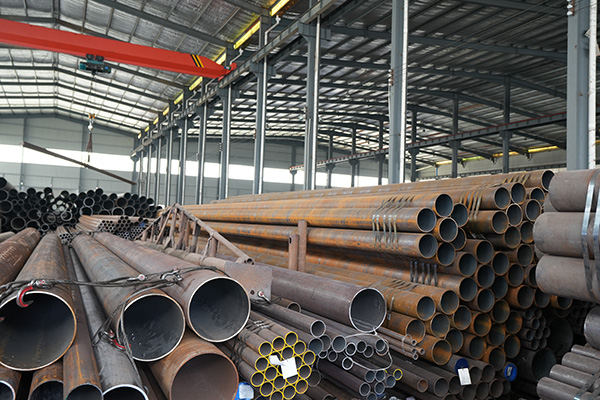
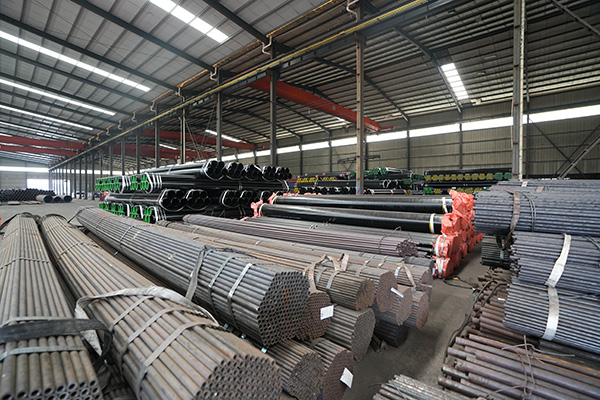
Understanding API 5L for Alloy Seamless Steel Pipe
API 5L is a globally recognized specification developed by the American Petroleum Institute for line pipe used in the transportation of oil, gas, and other fluids. For alloy seamless steel pipe, API 5L focuses on:
Chemical composition control
Mechanical performance under pressure
Manufacturing process traceability
Inspection and testing requirements
Grades such as API 5L X42, X52, X60, X65, and X70 are commonly associated with alloy seamless steel pipe production, depending on project demands.
Raw Material Selection: The Foundation of Quality
The manufacturing process begins with high-quality alloy steel billets. These billets are carefully selected based on:
Carbon and alloying element ratios
Clean steelmaking process
Uniform internal structure
A qualified manufacturer ensures that all billets are sourced from approved steel mills and undergo incoming inspection. This stage directly affects the pipe’s strength, corrosion resistance, and service life.
Heating and Piercing Process
Billet Heating
The billets are heated in a rotary hearth furnace to a controlled temperature, ensuring consistent plasticity without damaging the internal structure.
Piercing
Once heated, the billet is pierced using a piercing mill, forming a hollow shell. This step is crucial in seamless pipe production, as it determines:
Wall thickness uniformity
Internal surface quality
Initial pipe geometry
Advanced production lines monitor temperature and deformation in real time to ensure stability during mass production.
Hot Rolling and Sizing
After piercing, the hollow shell undergoes hot rolling through a series of rolling mills. The pipe is gradually elongated and reduced to its required diameter and wall thickness.
Key advantages of this stage include:
Improved grain refinement
Enhanced mechanical properties
Consistent dimensional accuracy
Sizing and stretch-reducing mills are used to achieve tight tolerances required by API 5L.
Heat Treatment for Performance Optimization
Heat treatment is essential for alloy seamless steel pipe to meet API 5L mechanical requirements. Common methods include:
Normalizing
Quenching and tempering
Stress relieving
This process enhances tensile strength, toughness, and resistance to cracking under pressure. A controlled heat treatment system also supports stable bulk production with repeatable quality.
Straightening, Cutting, and Surface Finishing
Once heat-treated, pipes are straightened to eliminate deformation. They are then cut to specified lengths and subjected to surface finishing processes such as:
Shot blasting
Pickling
Protective coating (if required)
These steps improve appearance and corrosion resistance, especially for long-distance pipeline projects.
Inspection and Quality Control Under API 5L
Quality control is integrated throughout the entire production process. Typical inspections include:
Chemical composition analysis
Mechanical testing (tensile, yield, elongation)
Hydrostatic testing
Ultrasonic and eddy current testing
Each alloy seamless steel pipe is traceable, ensuring compliance with API 5L and project specifications. This level of inspection reflects a manufacturer’s true production capability rather than simple certification claims.
Industrial Applications of Alloy Seamless Steel Pipe
Alloy seamless steel pipe manufactured under API 5L is widely used in:
Oil and gas transmission pipelines
Petrochemical processing plants
Power generation facilities
Offshore and onshore infrastructure
Its ability to withstand high pressure, temperature variations, and corrosive environments makes it a preferred choice for critical applications.
Conclusion: Choosing a Reliable Alloy Seamless Steel Pipe Manufacturer
Understanding the manufacturing process under API 5L helps buyers evaluate real production strength rather than marketing claims. From billet selection to final inspection, every step contributes to the safety and performance of alloy seamless steel pipe.
A reliable Alloy Seamless Steel Pipe Manufacturer is defined by standardized production systems, strict quality control, and proven bulk supply capability. These factors ensure consistent delivery, stable performance, and long-term project success in demanding industrial environments.
References
GB/T 7714:Topa A, Cerik B C, Kim D K. A useful manufacturing guide for rotary piercing seamless pipe by ALE method[J]. Journal of Marine Science and Engineering, 2020, 8(10): 756.
MLA:Topa, Ameen, Burak Can Cerik, and Do Kyun Kim. "A useful manufacturing guide for rotary piercing seamless pipe by ALE method." Journal of Marine Science and Engineering 8.10 (2020): 756.
APA:Topa, A., Cerik, B. C., & Kim, D. K. (2020). A useful manufacturing guide for rotary piercing seamless pipe by ALE method. Journal of Marine Science and Engineering, 8(10), 756.