

Understanding the Critical Role of Steam Pipeline Tubes in Power Plants
A steam pipeline tube serves as the backbone of steam distribution in power generation units. Its ability to carry superheated steam from boilers to turbines directly affects energy output, safety, and operating costs. Because steam temperatures and pressures fluctuate rapidly throughout daily operations, only tubes built to high industrial standards—such as API 5L X46—can maintain long-term stability.
For any Manufacturer specializing in industrial tubes, maintaining reliable Production and ensuring consistent bulk supply remain fundamental to meeting power-plant requirements.
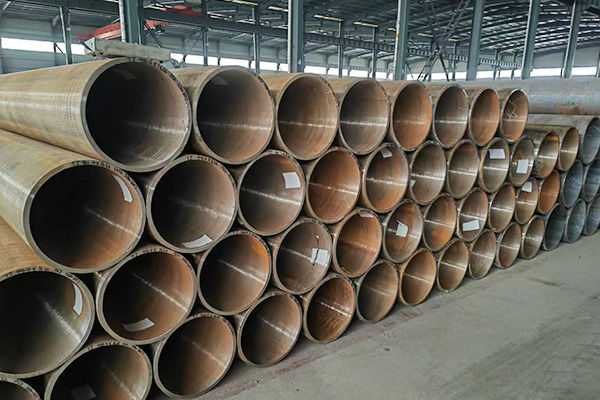
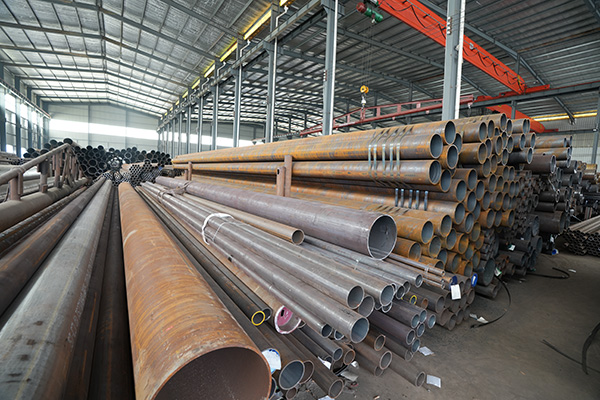
How Steam Pipeline Tubes Operate in High-Temperature Environments
In power stations, steam pipeline tubes are constantly exposed to a combination of intense heat, mechanical stress, and corrosive vapor. Their performance influences multiple aspects of plant output:
·Stable steam transfer efficiency
The tube must minimize thermal loss so the steam entering the turbine maintains high enthalpy, improving efficiency.
·Resistance to internal pressure pulses
Load transitions can suddenly change the pressure level. API 5L X46 tubes are engineered to resist these fluctuations.
·Long-duration operational resilience
With power plants often running continuously, tubes need high creep strength and fatigue resistance to avoid unexpected failures.
These factors make steam pipeline tubes indispensable in the overall thermal management system.
Why API 5L X46 Serves as a Reliable Material for Steam Transport
Although API 5L is widely known for pipeline applications, its mechanical consistency makes it suitable for high-pressure steam environments. The X46 grade offers a set of advantages that align well with the needs of high-temperature installations:
1. Strong tensile and yield properties
X46 steel maintains shape and mechanical integrity even under heavy steam pressure.
2. Thermal fatigue resistance
Frequent heating and cooling cycles can weaken many materials, but X46 demonstrates dependable structural behavior under repeated stress.
3. Improved resistance against oxidation
Superheated steam often accelerates corrosion. X46 helps extend tube lifespan by offering better oxidation tolerance.
4. High Production repeatability
Its standardized chemical composition allows manufacturers to produce consistent batches suitable for bulk orders.
How Steam Pipeline Tubes Contribute to Energy Efficiency
Heat retention is one of the most important performance factors. A steam pipeline tube can significantly reduce energy waste through:
·Uniform thickness
Consistent wall dimensions help maintain steady thermal distribution.
·Smooth inner surfaces
Reduced friction preserves steam velocity and minimizes pressure loss along the pipeline.
·Structural rigidity under continuous thermal exposure
API 5L X46 material prevents deformation that could disrupt steam delivery.
When these factors work together, the power plant benefits from better fuel utilization and steady operational output.
What to Consider When Selecting Steam Pipeline Tubes
Several core parameters determine whether a tube can reliably function in demanding steam environments:
1. Maximum operating temperature
The tube must endure extreme heat, often exceeding 450°C.
2. Pressure class compatibility
It should safely handle both normal operating pressure and sudden spikes.
3. Corrosion and scaling resistance
High-humidity steam and oxygen exposure can compromise material integrity.
4. Weldability
X46 steel is known for its ease of welding, which is crucial during installation.
5. Manufacturer capability and Production stability
A trusted Manufacturer ensures dimensional accuracy, chemical uniformity, and dependable bulk supply.
Why Manufacturing Quality Determines Tube Performance
For high-temperature systems, tube quality is directly tied to plant safety. Choosing a capable Manufacturer ensures:
·consistent metallurgical properties
·strict adherence to API 5L specifications
·precise sizing and wall-thickness control
·effective heat treatment during Production
·reliable fulfillment of bulk supply for large projects
These factors help reduce the risk of operational disruptions and costly maintenance events.
Strategies to Extend the Service Life of API 5L X46 Steam Pipeline Tubes
Plant engineers typically adopt several practices to maximize tube durability:
·Conduct periodic heat-stress inspections
Early detection of creep or micro-cracks reduces failure risks.
·Use anti-corrosion surface coatings
These slow down oxidation caused by high-temperature steam.
·Implement gradual heating and cooling cycles
Minimizes thermal shock that accelerates material fatigue.
·Maintain consistent sourcing
Using API 5L X46 from one Manufacturer guarantees predictable performance.
Conclusion: Choosing the Right Steam Pipeline Tube for High-Temperature Systems
A steam pipeline tube designed for high-temperature power operations must deliver structural durability, heat resistance, and stable performance under constant load. API 5L X46 remains a trusted material because it fulfills these technical requirements while offering reliability in large-scale industrial settings. When paired with a Manufacturer capable of consistent Production and bulk supply, power plants can achieve safer operation, improved efficiency, and fewer maintenance interruptions.
Selecting the right steam pipeline tube ultimately determines how effectively a power system can convert heat into consistent energy output.
References
GB/T 7714:Viswanathan R. Damage mechanisms and life assessment of high temperature components[M]. ASM international, 1989.
MLA:Viswanathan, Ramaswamy. Damage mechanisms and life assessment of high temperature components. ASM international, 1989.
APA:Viswanathan, R. (1989). Damage mechanisms and life assessment of high temperature components. ASM international.