

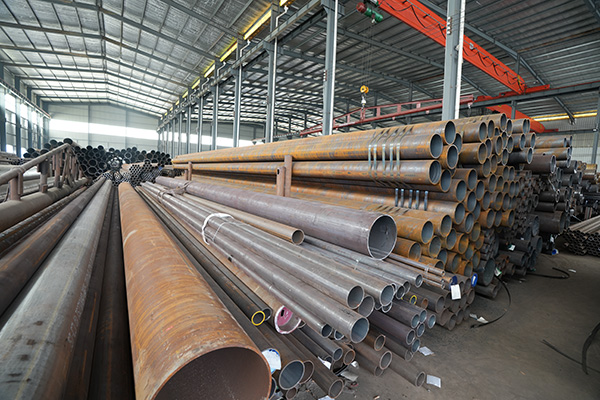
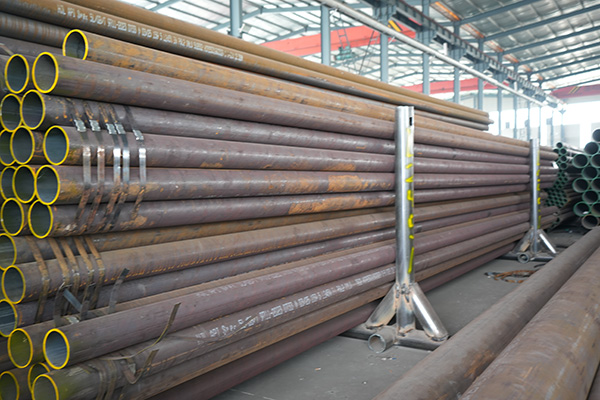
In every modern power plant, operating equipment must endure extreme heat, high internal pressure, and continuous long-cycle workloads. To maintain stable output, facilities rely on highly engineered piping capable of performing under harsh thermal environments. One such critical component is the Power Plant Alloy Pipe, widely used across steam lines, boiler systems, and turbine-related zones.
With the ability to deliver large-volume manufacturer-level production, our Power Plant Alloy Pipe—built to API 5L specifications and utilizing X42N material—provides the durability and temperature resistance required for today’s energy systems.
Why Alloy Pipe Is Essential in Heat-Intensive Power Generation
Power plants run at extremely elevated temperatures, and standard steel pipes simply cannot withstand the cycles of expansion, contraction, and stress. Power Plant Alloy Pipe offers the combination of heat resistance and strength needed to maintain stable operations.
1. Maintains Structure Under Thermal Extremes
X42N alloy provides predictable performance even when exposed to long-term high temperatures. Its metallurgical structure resists deformation, oxidation, and thermal fatigue.
2. Handles High Pressure Without Losing Strength
High-pressure steam transmission is the backbone of energy conversion. With API 5L certification, these pipes deliver mechanical strength that prevents fractures or pressure-related failures.
3. Designed for Continuous Operation
Because power facilities rarely stop running, material reliability is essential. Alloy pipe maintains mechanical integrity through thousands of heating and cooling cycles.
The Importance of API 5L Compliance in Power Plant Pipelines
The API 5L standard sets strict guidelines for line pipe used across industrial and high-pressure environments. For power plant operations, this specification ensures:
·Reliable mechanical and tensile properties
·Consistent wall thickness and chemical composition
·Proven performance in elevated-pressure systems
·Traceable and controlled production processes
Choosing API 5L X42N Power Plant Alloy Pipe guarantees that the pipeline system meets global safety and performance requirements.
X42N Material: A Strong Foundation for High-Temperature Applications
The steel grade X42N is valued for its balanced characteristics—durability, heat tolerance, and flexibility under stress.
·Excellent Heat Stability
X42N maintains its load-bearing ability in areas exposed to continuous heat, such as reheater circuits or boiler transition lines.
·Robust Anti-Corrosion Behavior
Its alloy composition protects against oxidation and high-temperature corrosion, extending system life in moisture-rich or chemical-steam environments.
·Easy Welding and Fabrication
Power plants often require custom pipe routing. X42N offers strong weld performance, ensuring secure joints in high-temperature locations.
·Consistency in Manufacturer Production
With controlled batch manufacturing, the material delivers stable performance across all supplied units, ensuring predictable engineering outcomes.
How Alloy Pipe Improves High-Temperature System Efficiency
Beyond basic structural performance, Power Plant Alloy Pipe plays a direct role in enhancing the operational efficiency of the entire plant.
1. Reduces Thermal Energy Loss
Alloy materials minimize heat dissipation, keeping steam temperatures stable and improving energy conversion efficiency.
2. Lowers Maintenance Requirements
When pipes resist thermal fatigue and pressure stress, unplanned downtime decreases, improving overall output continuity.
3. Enhances Safety in High-Pressure Zones
Cracks or deformations can cause major system failures. API 5L X42N alloy pipes significantly reduce risk through superior strength and toughness.
4. Supports Higher-Temperature Operations
To achieve optimal turbine efficiency, steam temperature must remain high. Alloy pipes ensure this can be maintained without structural degradation.
Primary Applications in Power Plant Thermal Pathways
Power plants involve multiple environments with intense temperature fluctuations. Power Plant Alloy Pipe is commonly used in:
·Boiler feedwater and outlet lines
·Primary and secondary steam systems
·Turbine inlet and exhaust piping
·Superheater and reheater circuits
·Heat recovery and cooling loops
·Auxiliary high-temperature transfer paths
In each of these sections, the pipe must withstand rapid temperature swings while maintaining structural integrity.
Why Manufacturers Prioritize Quality Control and Production Stability
For energy facilities, pipeline quality is directly tied to safety and long-term performance. As a professional alloy pipe manufacturer with mass-production capability, maintaining consistency and quality is essential.
Quality-focused production ensures:
·Predictable performance across all supplied pipes
·Fewer installation issues in field engineering
·High reliability for long-term power plant planning
·Compliance with global industrial standards like API 5L
Such consistency is crucial for both new installations and large-scale system upgrades.
Conclusion: The Critical Role of Power Plant Alloy Pipe in High-Temperature Operations
In high-demand energy environments, Power Plant Alloy Pipe is indispensable. Engineered for heat resistance, pressure stability, and long service life, pipes manufactured to API 5L standards with X42N material support safe, efficient, and continuous power plant operation.
For facilities requiring durable, thermally stable, and manufacturer-supplied piping solutions, Power Plant Alloy Pipe remains the foundation of high-temperature system reliability.
References
GB/T 7714:Viswanathan R. Damage mechanisms and life assessment of high temperature components[M]. ASM international, 1989.
MLA:Viswanathan, Ramaswamy. Damage mechanisms and life assessment of high temperature components. ASM international, 1989.
APA:Viswanathan, R. (1989). Damage mechanisms and life assessment of high temperature components. ASM international.