

The Core Role of High Pressure Boiler Pipe
In any facility that relies on steam generation or high-temperature heat transfer, the High Pressure Boiler Pipe is a key structural element that determines operational safety and system lifespan. These pipes are not ordinary steel tubes; they are purpose-built components engineered to withstand extreme internal pressure, constant thermal exposure, and corrosive environments.
As industries expand and operational loads rise, manufacturers specializing in API 5L X42 pipes continue to optimize production processes to serve large-scale, bulk supply demands. Understanding how these pipes function gives engineers and operators a clearer perspective on material selection and system design.
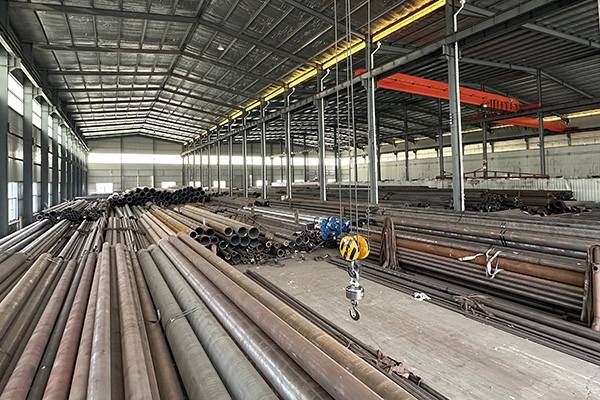
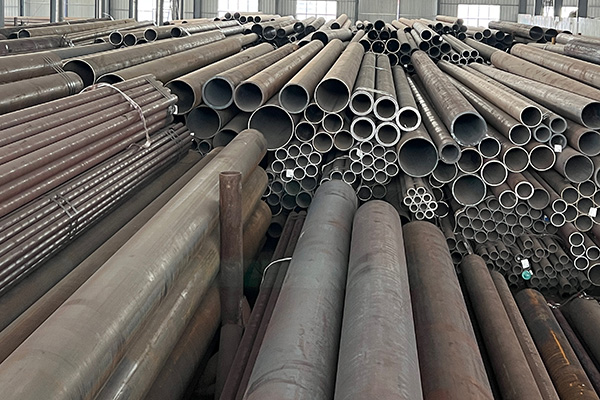
What Defines a High Pressure Boiler Pipe?
A High Pressure Boiler Pipe is a heavy-duty steel pipe developed for transporting superheated steam or high-pressure fluids. Unlike standard industrial pipes, they must perform reliably in:
·High-pressure environments
·Elevated temperatures
·Highly reactive or corrosive atmospheres
·Continuous thermal cycling
The API 5L X42 grade steel used in many of these pipes is engineered for durability, high strength, and stable thermal performance, making it ideal for severe boiler conditions.
How High Pressure Boiler Pipes Operate
The working principles behind a High Pressure Boiler Pipe are rooted in material science, thermal engineering, and mechanical stress behavior. Several core factors ensure stable performance under harsh conditions.
1. Supporting Extreme Internal Pressure
Internal steam pressure constantly pushes outward on the pipe wall, generating multiple stress types:
·Circumferential (hoop) stress
·Axial stress
·Radial stress
Because pressure levels may fluctuate sharply during operation, the pipe must retain structural integrity at all times. Seamless pipe production—commonly used for these applications—eliminates weak points and enhances the pipe’s ability to withstand long-term loading.
2. Maintaining Strength at High Temperatures
Boiler pipes frequently operate at temperatures high enough to damage standard steels. API 5L X42, however, contains alloying elements that improve:
·High-temperature strength
·Heat resistance
·Resistance to creep deformation
·Microstructure stability
This allows the pipe to sustain thermomechanical loads without softening or deforming.
3. Thermal Expansion Control and Heat Transfer Efficiency
When exposed to high temperatures, steel naturally expands. However, uncontrolled or uneven expansion can cause:
·Misalignment
·Joint failure
·Excessive stress
·Premature fatigue
High Pressure Boiler Pipe is designed to exhibit predictable thermal expansion and smooth heat conduction, ensuring stable performance in heat exchangers and boiler systems.
4. Protection Against Corrosion and Scaling
Inside a boiler, high-temperature steam and dissolved impurities accelerate corrosion. To overcome these challenges, API 5L X42 materials form protective surface layers that reduce:
·Steam oxidation
·Internal corrosion
·Metal thinning
·Surface scaling
This improves operational efficiency and reduces the frequency of maintenance shutdowns.
5. Manufacturing Techniques That Enhance Durability
The reliability of a High Pressure Boiler Pipe is closely tied to its manufacturing process. High-quality pipes are typically produced using:
·Controlled Hot Rolling
Ensures even wall thickness and grain structure.
·Seamless Forming Technology
Eliminates weld seams, reducing the risk of fatigue failure.
·Heat Treatment Procedures
Improves strength, toughness, and resistance to thermal deformation.
Manufacturers with advanced production lines are able to maintain rigorous dimensional accuracy while meeting bulk supply requirements for large industrial projects.
Why API 5L X42 Material Is Used Widely
The API 5L X42 specification is widely recognized in the pipeline and boiler industries for its:
·Reliable mechanical strength
·Balanced ductility
·Compatibility with high-pressure operating conditions
·Excellent weldability
Its performance makes it a strong candidate for use in high-pressure, high-temperature thermal systems.
Applications of High Pressure Boiler Pipes Across Industries
These pipes are widely used in:
·Power generation plants
·Petrochemical and refinery installations
·High-pressure steam distribution networks
·Heat exchanger systems
·Chemical processing units
Any system that requires uninterrupted high-pressure steam delivery relies on the strength and reliability of High Pressure Boiler Pipes.
Conclusion: Choosing the Right High Pressure Boiler Pipe for Industrial Safety
A High Pressure Boiler Pipe is a critical engineering component designed to function in environments that demand exceptional strength, stability, and heat resistance. Selecting pipes produced to API 5L X42 standards from a dependable manufacturer with strong production capability and consistent bulk supply capacity ensures operational safety and long-term efficiency.
By understanding its working principles—internal stress resistance, heat tolerance, corrosion protection, and structural uniformity—industries can make informed decisions that reduce downtime, improve productivity, and extend the service life of the entire boiler system.
References
GB/T 7714:Young D J. High temperature oxidation and corrosion of metals[M]. Elsevier, 2008.
MLA:Young, David John. High temperature oxidation and corrosion of metals. Vol. 1. Elsevier, 2008.
APA:Young, D. J. (2008). High temperature oxidation and corrosion of metals (Vol. 1). Elsevier.